

GFI License provides access to a portfolio of IT management, security, communication, and infrastructure solutions designed for organizations that need reliable tools for protecting data, managing systems, improving operational visibility, and simplifying administration. GFI Software develops solutions across several technology areas, including email security, email archiving, network management, endpoint protection, collaboration, and infrastructure monitoring.
Quick Benefits
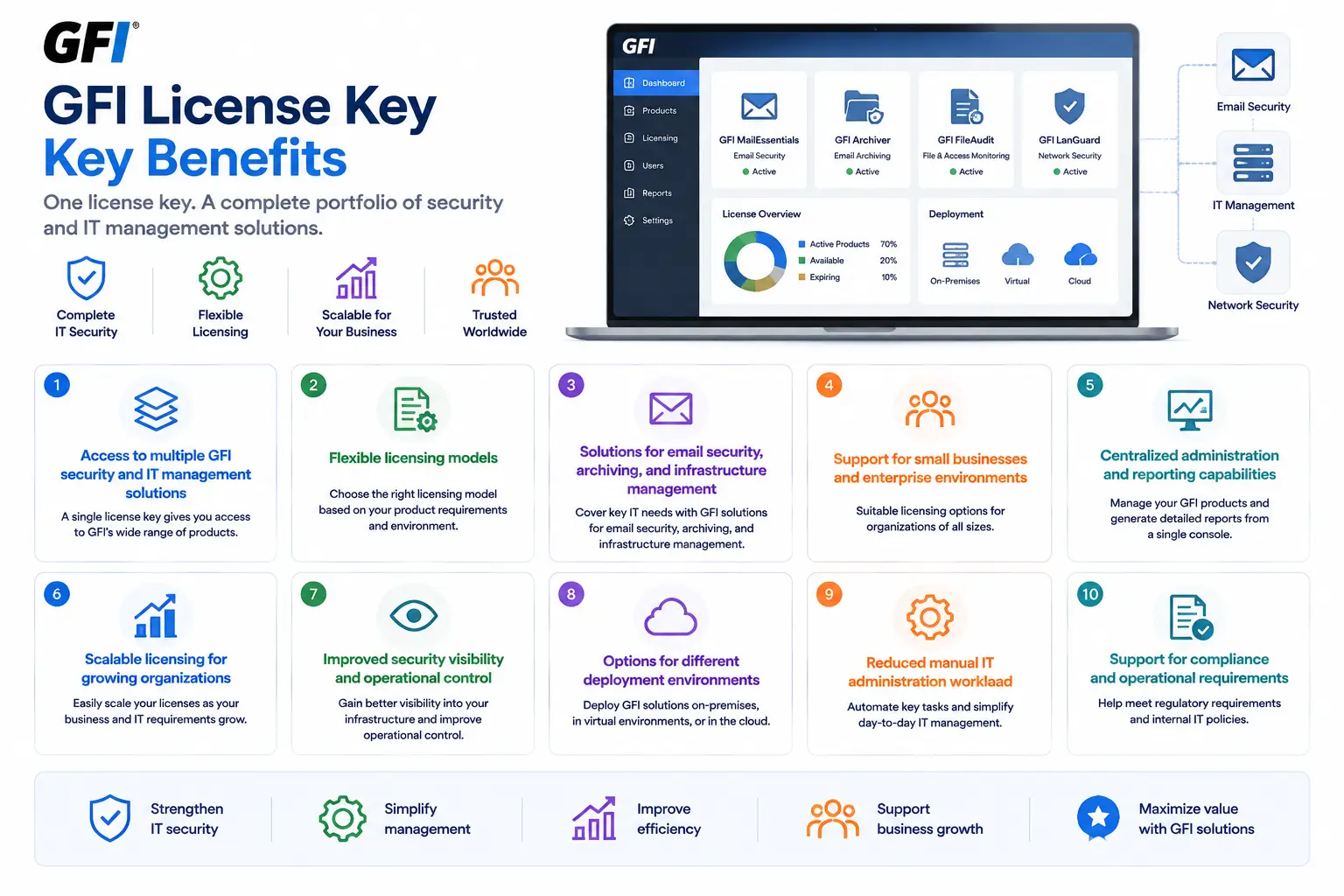
- Access to multiple GFI security and IT management solutions
- Flexible licensing models based on product requirements
- Solutions for email security, archiving, and infrastructure management
- Support for small businesses and enterprise environments
- Centralized administration and reporting capabilities
- Scalable licensing for growing organizations
- Tools for improving security visibility and operational control
- Options for different deployment environments
- Reduced manual IT administration workload
- Support for compliance and operational requirements
GFI License At a Glance
Category: IT Management, Security, and Communication Software Licensing
Primary users: IT administrators, security teams, infrastructure teams, and service providers
Main solutions: Email security, archiving, network management, endpoint management, and collaboration tools
Deployment models: On-premises, cloud-based, and hybrid deployments depending on product
Common licensing factors: Users, mailboxes, endpoints, devices, servers, modules, and subscription duration
Target environments: SMBs, enterprises, and managed service providers
License type: Product-specific subscription and perpetual options depending on solution
Main consideration: Selecting the correct license according to workload, infrastructure size, and required features
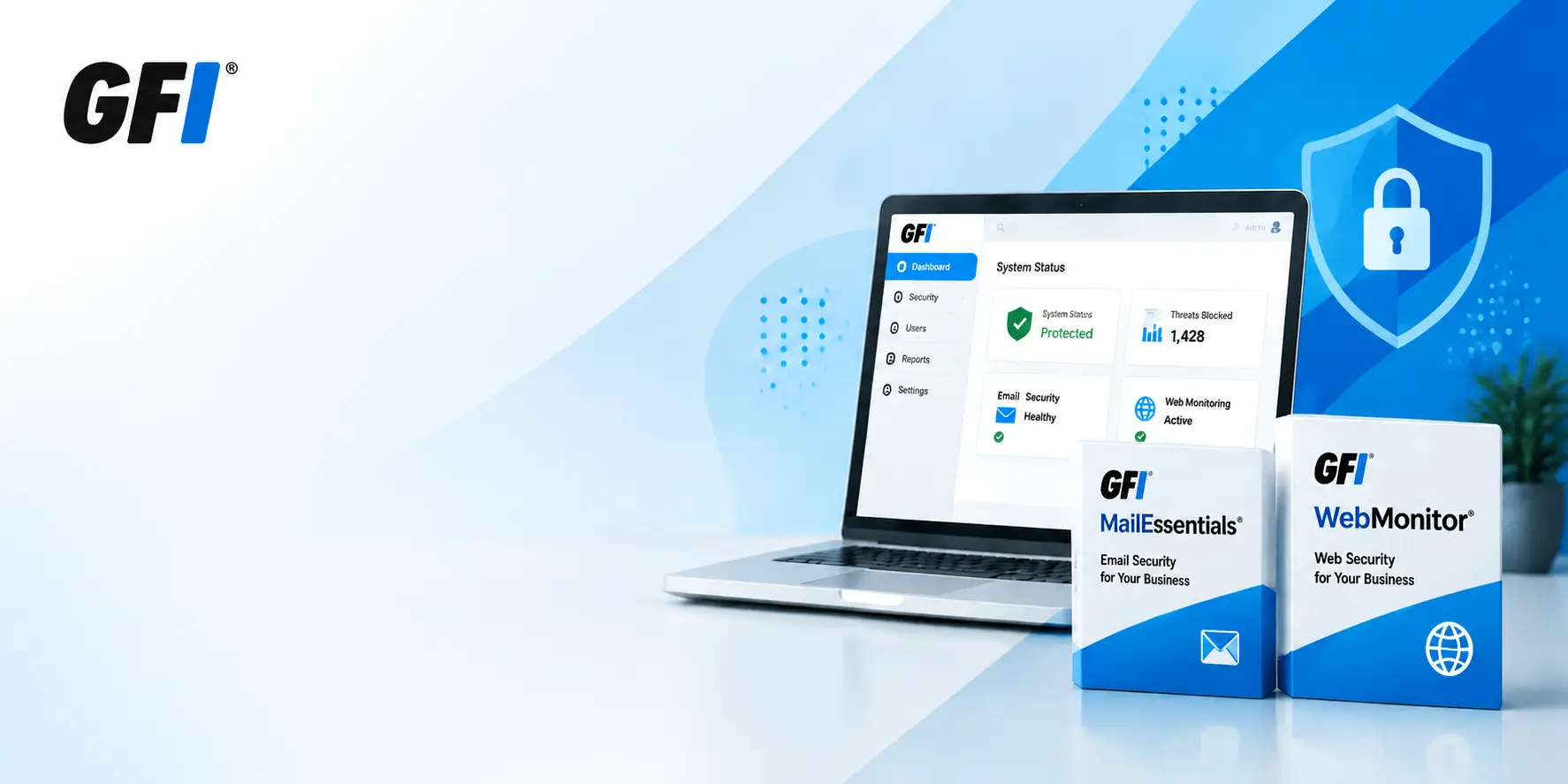
License Overview
A GFI License is determined according to the specific GFI product being deployed and the resources that product manages or protects. Unlike vendors that use one licensing metric across their entire portfolio, GFI products follow different licensing approaches because they solve different IT challenges.
For example, email-focused solutions may calculate licensing based on users or mailboxes, while network and security products may consider endpoints, servers, devices, or managed resources. Additional features, modules, support levels, and subscription periods can also influence the final license requirement.
When selecting a GFI License, organizations should evaluate their current infrastructure, expected growth, required capabilities, and operational objectives. This approach helps ensure that the selected license provides enough capacity without creating unnecessary licensing expenses.
GFI Product Portfolio Overview
| Product Family | Main Purpose | Common Licensing Considerations |
|---|---|---|
| GFI Archiver | Email and file archiving, compliance, and data retention | Users, mailboxes, storage requirements |
| GFI FaxMaker | Digital fax communication management | Users, fax requirements, deployment model |
| GFI MailEssentials | Email security, anti-spam, and email protection | Mailboxes, users, email environment size |
| GFI LanGuard | Patch management and vulnerability assessment | Managed endpoints and network devices |
| GFI KerioControl | Firewall, network security, and traffic management | Users, devices, bandwidth, and features |
| GFI KerioConnect | Business email and collaboration platform | Mailboxes, users, and server requirements |
| GFI EventsManager | Log monitoring and event management | Log sources, events, and infrastructure scope |
How GFI Licensing Works
GFI licensing works differently depending on the selected product and deployment scenario. The company does not use one single licensing formula across all solutions because email security, archiving, endpoint management, and network protection have different measurement requirements. Some GFI products are licensed according to users or mailboxes because they protect communication services, while others are based on endpoints, servers, devices, or managed resources because they focus on infrastructure and security operations. Additional modules, advanced features, support agreements, and subscription duration may also affect licensing requirements. Before purchasing a GFI License, organizations should evaluate the systems being protected, the number of users or devices involved, and future expansion plans to select the appropriate licensing model.
Options and Licensing Models
| Licensing Model | Description | Common Usage |
|---|---|---|
| User-Based Licensing | Licensing calculated according to users, accounts, or mailboxes | Email security, archiving, and collaboration solutions |
| Endpoint-Based Licensing | Licensing based on managed computers, workstations, or servers | Patch management and endpoint security products |
| Device-Based Licensing | Licensing according to protected network devices or infrastructure components | Network management and security solutions |
| Server-Based Licensing | Licensing based on deployed servers or protected systems | Infrastructure-focused products |
| Subscription Licensing | Time-based access including updates and support options | Cloud-based and modern deployments |
| Perpetual Licensing | Long-term product usage with optional maintenance agreements | Traditional on-premises deployments |
Features and Benefits
GFI solutions help organizations simplify IT operations by providing focused tools for common security, communication, and infrastructure challenges. Instead of managing separate disconnected processes, IT teams can use dedicated platforms for tasks such as email protection, data retention, patch management, network control, and system monitoring.
One of the main advantages of the GFI portfolio is operational simplicity. Many organizations, especially small and medium businesses, require enterprise-level capabilities but do not want the complexity of large security or management platforms. GFI products provide practical administration features, centralized visibility, and reporting capabilities that help IT teams maintain control over their environments.
For security-focused deployments, GFI solutions can improve visibility into threats, vulnerabilities, and system activity. For operational environments, they help reduce repetitive administrative tasks and improve consistency across daily IT processes.
Compatibility and Requirements
Before selecting a GFI License, organizations should review their technical environment and deployment requirements.
Important considerations include:
- Existing operating systems and infrastructure
- Number of users, mailboxes, endpoints, or devices
- Cloud or on-premises deployment preferences
- Required integrations
- Security and compliance requirements
- Expected future growth
Compatibility requirements vary between GFI products. Email solutions may require integration with mail platforms, while network and security solutions may depend on infrastructure size, device types, or existing management systems. Organizations should evaluate these requirements before deployment to ensure the selected product fits their environment.
Activation and Deployment
GFI license activation generally begins after purchasing the required product license and registering the license information within the relevant GFI platform.
The deployment process depends on the selected solution, but common steps include:
- License registration and activation
- Product installation or cloud configuration
- Initial environment setup
- Importing users, devices, or services
- Applying policies and required settings
A planned deployment helps organizations configure the product correctly and ensures that the licensed capacity matches the actual operational environment.
Pricing and Quote Process
Pricing for a GFI License depends on the selected product, licensing model, deployment method, and the resources being managed or protected. Since GFI offers solutions across multiple categories, the pricing structure can vary significantly between products.
Before requesting a quote, organizations should define:
- Required GFI product
- Number of users, mailboxes, endpoints, devices, or servers
- Required features and modules
- Deployment model
- Subscription period or maintenance requirements
- Expected future growth
Providing accurate environment details helps determine the correct license capacity and prevents situations where an organization purchases insufficient resources or pays for unused features. For organizations with changing requirements, it is also important to consider future expansion when selecting a license tier. A properly planned GFI License should support current needs while allowing room for operational growth.
GFI pricing depends on your product edition, security solution, license term, deployment model, user requirements, and support needs.