

Imagicle Attendant Console is a unified communications application designed to help receptionists, operators, and front-office teams manage high volumes of business calls efficiently. An Imagicle Attendant Console License enables organizations to improve call handling, routing, and caller experience through an integrated operator console.
Quick Benefits
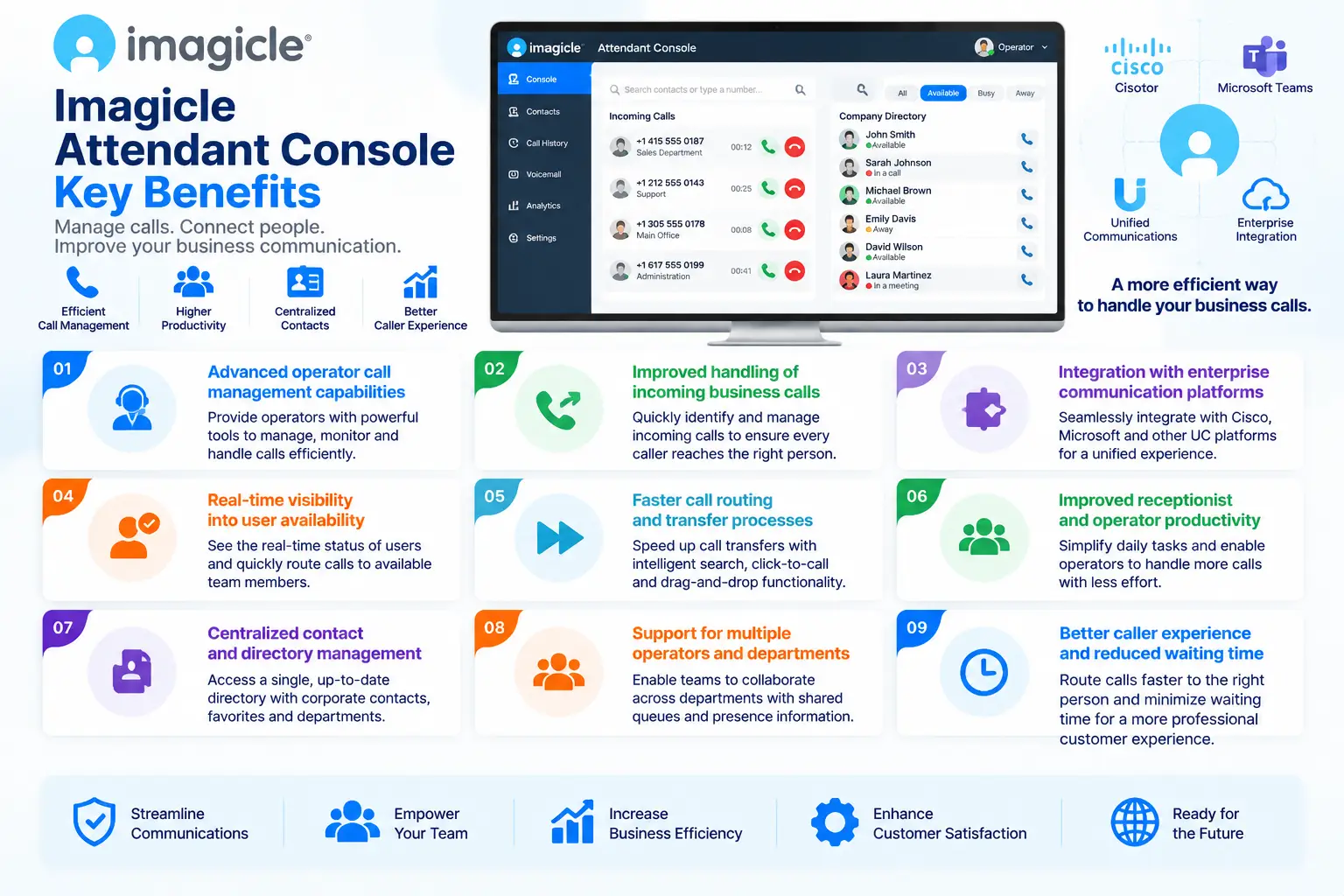
- Advanced operator call management capabilities
- Improved handling of incoming business calls
- Integration with enterprise communication platforms
- Real-time visibility into user availability
- Faster call routing and transfer processes
- Improved receptionist and operator productivity
- Centralized contact and directory management
- Support for multiple operators and departments
- Better caller experience and reduced waiting time
Imagicle Attendant Console At a Glance
What it is: Operator console and call management application
Parent category: Imagicle License
Primary role: Manage incoming calls and improve operator communication workflows
Main users: Receptionists, operators, help desks, front-office teams, and communication administrators
Core capabilities: Call routing, transfer management, directories, presence visibility, queues, and operator workflows
Integration platforms: Cisco Unified Communications Manager, Cisco Webex, and supported collaboration environments
Deployment: Cloud, hybrid, and on-premises models depending on environment
License Overview
An Imagicle Attendant Console License is primarily determined by the number of operators or users who require access to the attendant interface and the communication capabilities needed within the organization. Unlike solutions that license every employee within the communication environment, attendant console licensing is usually focused on the individuals responsible for managing incoming calls, directing conversations, and supporting front-office communication workflows.
Organizations should evaluate the number of receptionists, operators, departments, extensions, and call-handling requirements before selecting the appropriate license capacity. A small company may only require one or two operator positions, while larger enterprises with multiple offices may need several operators working across different locations.
The required licensing model can also depend on the collaboration platform integration, required features, and deployment architecture. Organizations using Cisco Unified Communications Manager or Cisco Webex environments should consider how the attendant console will fit into the existing voice infrastructure. Selecting the correct Imagicle Attendant Console License helps organizations provide efficient call management without licensing unnecessary users.
Product Overview
Contact Directory and Search Capabilities
Large organizations often have hundreds or thousands of users, departments, and external contacts. Finding the correct person quickly is essential for reception and support teams. Imagicle Attendant Console provides directory management and search capabilities that help operators locate users and contacts faster. By reducing manual searching and improving access to communication information, operators can respond more effectively to incoming requests.
Enterprise Call Workflow Management
Organizations with multiple departments or locations often require structured call handling processes. Imagicle Attendant Console supports workflows that help operators manage calls according to business requirements. Whether handling customer calls, internal requests, or general inquiries, operators can use a centralized interface to improve consistency and reduce missed communication.
Integration with Collaboration Platforms
A major advantage of Imagicle Attendant Console is its integration with enterprise communication environments. The solution extends existing collaboration platforms by adding specialized operator functionality without requiring organizations to replace their current voice infrastructure. This allows businesses to improve receptionist and operator workflows while continuing to use their existing communication investments.
Core Technical Flow
Incoming Business Call
→ Enterprise Telephony Platform (Cisco CUCM / Webex Environment)
→ Imagicle Attendant Console Interface
→ Operator Identification and Call Management
→ Transfer / Routing / Queue Handling
→ Final User Connection
The platform provides operators with the information and controls required to manage incoming calls efficiently.
Options and Licensing Models
| Licensing Factor | Description | Suitable For |
|---|---|---|
| Operator Users | Number of receptionists or operators using the console | Organizations with dedicated call-handling teams |
| Extensions | Voice users and extensions managed through the platform | Enterprise communication environments |
| Departments / Locations | Number of offices or communication groups supported | Multi-site organizations |
| Advanced Features | Additional call management capabilities | Businesses requiring enhanced workflows |
| Integration Requirements | Compatibility with existing communication platforms | Cisco and UC environments |
| Support and Subscription | Updates, maintenance, and assistance options | Long-term deployments |
Features and Benefits
Imagicle Attendant Console improves business communication by giving operators a dedicated workspace for managing incoming calls. Instead of relying only on traditional phone interfaces, reception teams gain better visibility into users, availability, and communication options.
A key benefit is improving caller experience. Faster identification of the correct recipient, better transfer decisions, and reduced waiting times help organizations provide a more professional communication experience. The solution also reduces operational pressure on reception and support teams. By centralizing contact information and presence details, operators can handle more calls with fewer manual steps. For organizations using enterprise collaboration platforms, Imagicle Attendant Console provides additional functionality that extends existing voice systems and makes communication processes more efficient.
Compatibility and Requirements
Before deploying Imagicle Attendant Console, organizations should evaluate their communication environment and operator requirements.
Important considerations include:
- Existing telephony platform
- Number of operators
- Number of extensions
- Call volume
- Required integrations
- Deployment architecture
- User synchronization requirements
Imagicle Attendant Console is commonly deployed alongside Cisco Unified Communications Manager and Cisco Webex environments. Organizations should verify compatibility with their current communication infrastructure before deployment. A proper assessment ensures that the attendant console integrates correctly with existing call routing and user management processes.
Activation and Deployment
Imagicle Attendant Console deployment begins with activating the purchased license and preparing the collaboration environment.
Typical deployment steps include:
- License registration and activation
- Installing or configuring the application
- Connecting to the communication platform
- Assigning operator accounts
- Configuring call workflows and permissions
Pricing and Quote Process
Pricing for an Imagicle Attendant Console License depends mainly on the number of operators, required features, communication environment, and deployment model.
Before requesting a quote, organizations should define:
- Number of operators
- Number of locations
- Existing telephony platform
- Required call management features
- Integration requirements
- Subscription and support needs
Accurate planning helps organizations select the correct license capacity while avoiding unnecessary licensing costs. Organizations should also consider future growth, especially when adding new offices, expanding communication teams, or increasing call-handling requirements.
Imagicle pricing depends on your selected applications, licensing model, deployment environment, subscription term, and support needs.