

ManageEngine Digital Risk Analyzer is a digital risk intelligence platform designed to help organizations discover, monitor, and reduce security risks that exist outside their internal network boundaries. As businesses expand their online presence through cloud services, websites, digital brands, third-party applications, and remote operations, attackers have more opportunities to exploit exposed assets and publicly available information.
Traditional security tools usually focus on systems already controlled by the organization. However, many modern attacks begin before an attacker reaches the internal environment. Exposed domains, leaked credentials, vulnerable public services, phishing campaigns, impersonated brands, and unmanaged internet-facing assets can create entry points long before a security team detects an active intrusion.
ManageEngine Digital Risk Analyzer helps security teams gain visibility into these external risks by continuously monitoring digital assets, analyzing threat intelligence, identifying security exposure, and providing actionable recommendations.
Quick Benefits
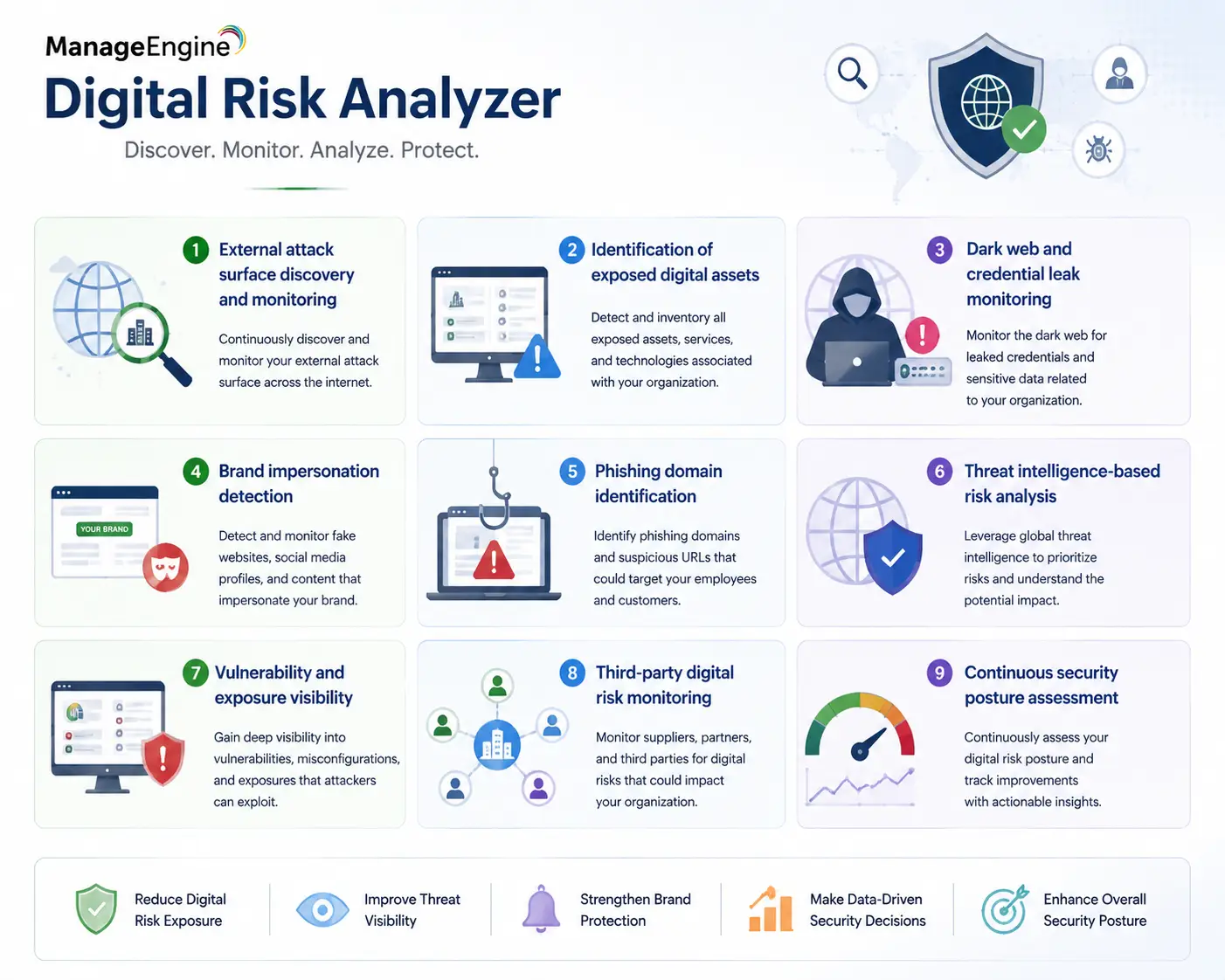
- External attack surface discovery and monitoring
- Identification of exposed digital assets
- Dark web and credential leak monitoring
- Brand impersonation detection
- Phishing domain identification
- Threat intelligence-based risk analysis
- Vulnerability and exposure visibility
- Third-party digital risk monitoring
- Continuous security posture assessment
ManageEngine Digital Risk Analyzer At a Glance
What it is: Digital risk intelligence and external attack surface monitoring platform
Parent category: ManageEngine License
Primary role: Discover and reduce external cybersecurity exposure
Security focus: Digital assets, leaked data, phishing, impersonation, and external threats
Deployment: SaaS-based security platform
Main users: Security teams, SOC analysts, CISOs, risk teams, and IT administrators
Key capabilities: Attack surface discovery, threat intelligence, brand monitoring, dark web monitoring, and risk analysis

License Overview
A ManageEngine Digital Risk Analyzer license is designed around the scale of digital assets and the level of external threat visibility required by the organization. Unlike traditional endpoint or network security licensing, digital risk platforms are typically influenced by the number of assets being monitored. These assets may include domains, subsidiaries, brand names, internet-facing services, digital identities, and other external resources that attackers could target.
The licensing requirement can vary significantly between organizations. A small company with one primary domain may need basic brand and exposure monitoring, while a multinational organization with multiple subsidiaries, regional websites, and third-party services may require broader asset discovery and intelligence coverage. When planning a Digital Risk Analyzer deployment, organizations should evaluate the number of digital properties that require monitoring, the required reporting depth, integration needs, and whether security teams need continuous threat intelligence updates.
Product Overview
External Attack Surface Monitoring
One of the biggest challenges in cybersecurity today is understanding what an organization exposes to the public internet. Cloud adoption, remote work, SaaS applications, and decentralized business operations have expanded the external attack surface. Security teams may not always have complete visibility into every domain, subdomain, service, or third-party resource associated with their organization.
ManageEngine Digital Risk Analyzer helps identify these external assets and provides visibility into potential weaknesses. This allows security teams to discover unknown exposure before attackers find and exploit it. The platform supports a proactive security approach by continuously analyzing external-facing information and highlighting areas that require attention.
Digital Asset Discovery and Risk Visibility
Many organizations have digital assets that grow over time through acquisitions, marketing campaigns, cloud migrations, and application deployments. A forgotten subdomain, an outdated public service, or an exposed credential can create significant security risk even if the internal infrastructure is properly protected.
Digital Risk Analyzer helps security teams maintain awareness of these assets by collecting intelligence from external sources and organizing findings into security-relevant categories. This improves communication between security, IT, and business teams because risk findings can be connected to identifiable digital resources instead of appearing as isolated security alerts.
Dark Web and Credential Monitoring
Compromised credentials remain one of the most common causes of unauthorized access. Attackers frequently trade stolen usernames, passwords, and corporate information through underground communities and data-leak channels. Detecting this exposure early allows organizations to reset credentials, investigate affected accounts, and reduce the possibility of account takeover. ManageEngine Digital Risk Analyzer provides monitoring capabilities for leaked information and threat intelligence sources, helping security teams identify whether corporate identities or sensitive information have appeared in unauthorized locations.
How ManageEngine Digital Risk Analyzer Works
Digital Risk Analyzer begins by identifying the organization’s external digital footprint. The platform collects information about domains, online assets, exposed services, brand references, and threat intelligence indicators. This information is analyzed to identify potential security concerns such as phishing infrastructure, impersonation attempts, leaked credentials, or unknown internet-facing assets.
Collected intelligence is then organized into risk categories and presented through dashboards and reports. Security teams can review findings, prioritize remediation activities, and track improvements over time. The platform acts as an external visibility layer that complements internal security controls such as firewalls, endpoint protection, SIEM platforms, and vulnerability scanners.
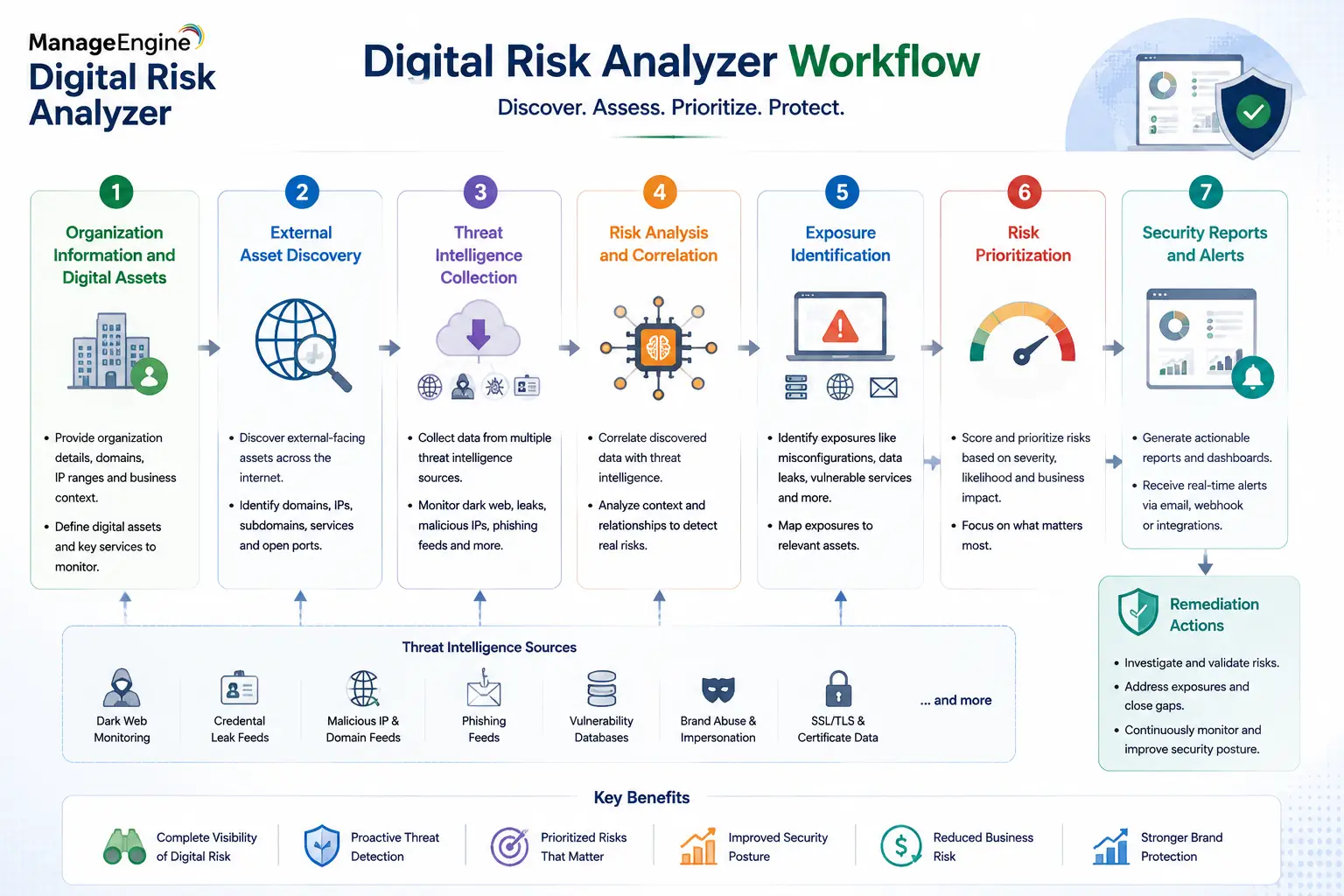
Core Technical Flow
Organization Information and Digital Assets
→ External Asset Discovery
→ Threat Intelligence Collection
→ Risk Analysis and Correlation
→ Exposure Identification
→ Risk Prioritization
→ Security Reports and Alerts
→ Remediation Actions
Options and Licensing Models
| Licensing Area | Description | Suitable For |
|---|---|---|
| Digital Asset Monitoring | Tracking domains, online properties, and external-facing resources | Organizations needing external attack surface visibility |
| Brand Protection Monitoring | Detecting impersonation attempts, fake domains, and phishing risks | Companies protecting digital identity and reputation |
| Credential Exposure Monitoring | Monitoring leaked usernames and compromised information | Organizations concerned about account takeover risks |
| Threat Intelligence Coverage | Continuous analysis of external threat sources | Security teams requiring proactive risk intelligence |
| Enterprise Monitoring Scope | Broader coverage across subsidiaries, domains, and business units | Large organizations with complex digital presence |
The final license requirement depends on the number of monitored assets, intelligence depth, reporting requirements, and the size of the organization’s external digital footprint.
Features and Benefits
The main value of Digital Risk Analyzer is reducing the gap between what an organization believes it owns and what attackers can actually see.
Many security incidents begin with information that was already publicly available but never monitored. A forgotten domain, exposed employee information, or fraudulent website can become an entry point for attackers.
By continuously monitoring external risks, organizations can identify issues earlier and assign remediation tasks before they become security emergencies.
The platform also improves security awareness across departments. Marketing teams can understand brand impersonation risks, IT teams can address exposed services, and security teams can prioritize threats based on business impact.
For organizations with multiple brands or subsidiaries, centralized visibility becomes especially valuable because external exposure can grow faster than internal security teams can manually track.
Compatibility and Requirements
Before deploying ManageEngine Digital Risk Analyzer, organizations should identify the digital assets that need protection.
Important considerations include:
- Primary and secondary domains
- Subsidiary brands
- Public-facing applications
- Cloud-hosted services
- Online customer portals
- Third-party platforms
- Required security integrations
- Reporting and compliance requirements
Organizations should also define ownership responsibilities. Discovering a risky asset is only useful when there is a clear process for deciding who investigates and resolves the issue. Integration with existing security workflows should also be reviewed. Security operations teams may want Digital Risk Analyzer findings to support existing SIEM, ticketing, or incident-response processes.
How Activation and Deployment Work
ManageEngine Digital Risk Analyzer is delivered as a cloud-based security service, reducing the need for additional infrastructure deployment. Activation begins with configuring the organization profile and defining the assets that should be monitored. Domains, brands, subsidiaries, and other relevant identifiers are added so the platform can begin collecting external intelligence.
After the initial discovery phase, security teams can review identified assets, evaluate risk findings, and configure reporting workflows. The platform should typically be introduced alongside an existing security process rather than treated as a standalone tool. Findings should connect with vulnerability management, incident response, identity security, and security-awareness activities.
Pricing and Quote Process
Pricing for a ManageEngine Digital Risk Analyzer license depends on the scope of external monitoring required.
For an accurate quote, organizations should provide:
- Number of domains and digital assets
- Number of brands or subsidiaries
- Required dark web monitoring scope
- Credential monitoring requirements
- Number of security users
- Reporting and integration needs
Large enterprises should also consider future expansion. Organizations often acquire new domains, launch new applications, or expand into new markets, which can increase the required monitoring scope. The correct license should provide enough visibility for current assets while allowing security teams to maintain coverage as the digital footprint grows.
ManageEngine pricing depends on your license edition, users, devices, deployment model, term, and support needs.