

Acunetix License provides access to enterprise web application security solutions designed to identify, assess, and manage vulnerabilities in websites, web applications, APIs, and network services. Acunetix helps organizations detect security weaknesses such as SQL Injection, Cross-Site Scripting (XSS), exposed configurations, and other application-layer risks before they can be exploited.
With advanced technologies such as DAST (Dynamic Application Security Testing), vulnerability scanning, automated crawling, and security assessment workflows, Acunetix enables organizations to improve application security, support compliance requirements, and reduce the risk associated with vulnerable web environments.
Quick Benefits
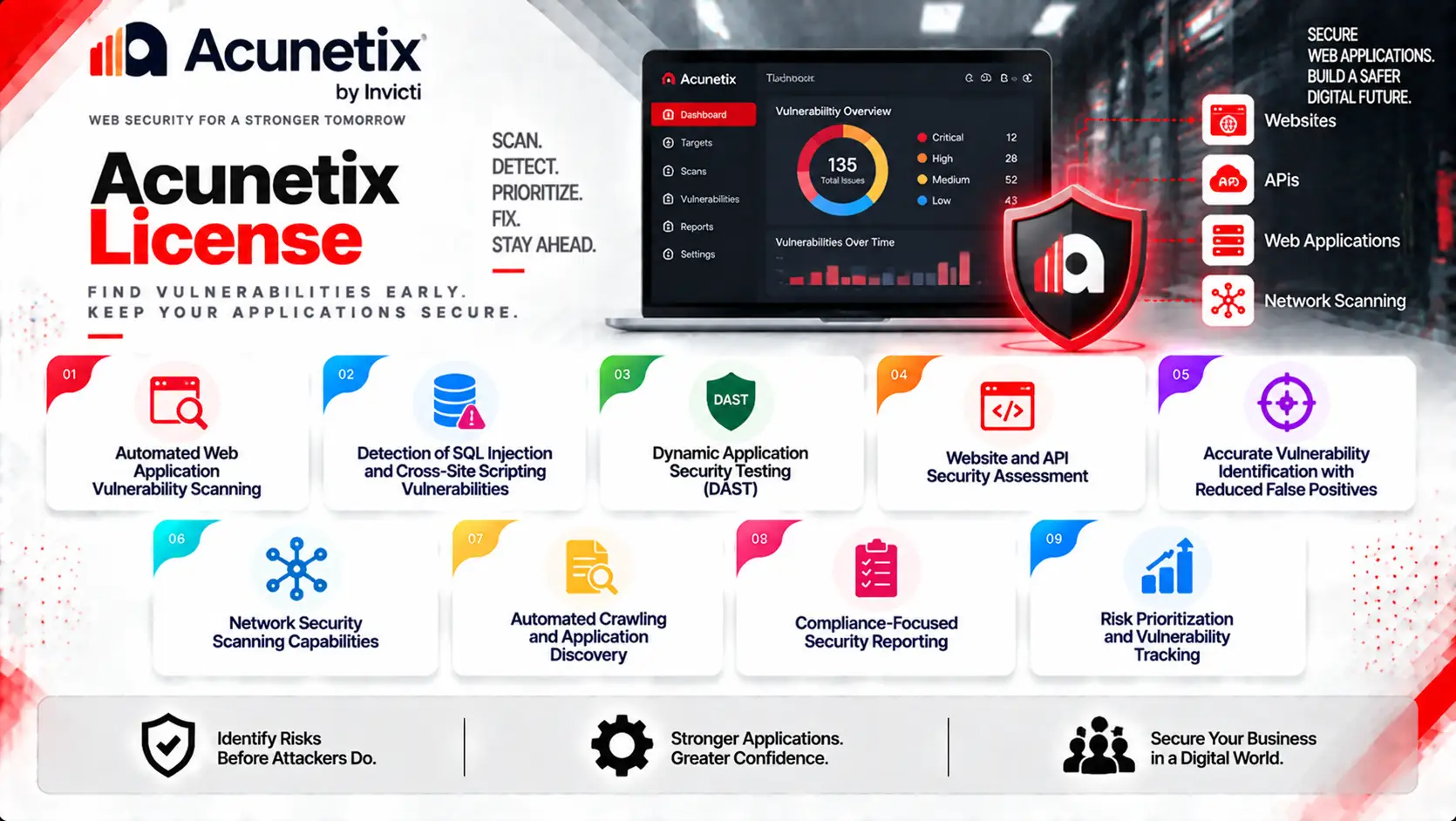
- Automated web application vulnerability scanning
- Detection of SQL Injection and Cross-Site Scripting vulnerabilities
- Dynamic Application Security Testing (DAST)
- Website and API security assessment
- Accurate vulnerability identification with reduced false positives
- Network security scanning capabilities
- Automated crawling and application discovery
- Compliance-focused security reporting
- Risk prioritization and vulnerability tracking
Acunetix License At a Glance
What it is: Web application security testing and vulnerability management licensing platform
Vendor: Invicti Security
Product name: Acunetix
Primary role: Automated web application and API vulnerability assessment
Security areas: Web application security, API testing, vulnerability discovery, compliance, and risk management
Core technology: Dynamic Application Security Testing (DAST)
Additional capabilities: Web crawling, vulnerability validation, authentication testing, reporting, and remediation guidance
Deployment models: On-premises, cloud, and hybrid environments
Typical environments: Enterprise applications, websites, APIs, e-commerce platforms, financial systems, healthcare applications, and internal business portals.
License Overview
An Acunetix License defines the ability to perform automated vulnerability assessments across web applications, APIs, and network services.
Unlike traditional security tools that focus on endpoints or infrastructure, Acunetix is designed specifically to identify vulnerabilities within applications and web-facing assets.
The licensing structure depends on the deployment model and the scope of scanning requirements.
Common licensing factors include:
- Number of target websites
- Number of web applications
- Number of APIs
- Number of scanners
- Number of users
- Cloud or on-premises deployment
- Scan frequency requirements
- Authentication testing requirements
- Reporting and compliance needs
- Subscription duration
For example, an organization scanning a small number of public websites will have different requirements compared with an enterprise security team managing hundreds of internal applications and APIs.
How Acunetix Licensing Works
Acunetix licensing is designed around the number and type of assets that require security testing.
A typical workflow includes:
Asset Discovery
→ Identify websites, applications, and APIs requiring assessment
Application Crawling
→ Map available pages, parameters, and application components
Security Testing
→ Perform automated vulnerability scanning
Risk Analysis
→ Identify and prioritize discovered weaknesses
Reporting and Remediation
→ Provide security reports and support vulnerability resolution
This process allows security teams to continuously evaluate application security throughout the development and operational lifecycle.
Acunetix Security Capabilities Overview
| Capability | Primary Purpose |
|---|---|
| Web Vulnerability Scanning | Detect security weaknesses in websites and applications |
| DAST Testing | Evaluate applications from an attacker perspective |
| API Security Testing | Identify vulnerabilities in modern API environments |
| Web Crawling | Discover application structure and attack surface |
| Authentication Testing | Scan protected applications using authenticated access |
| Network Security Scanning | Identify exposed network-level vulnerabilities |
| Compliance Reporting | Generate security reports for audits and governance |
| Vulnerability Management | Track, prioritize, and remediate discovered risks |
Licensing Options and Models
| Licensing Option | Description | Suitable For |
|---|---|---|
| Cloud Subscription Licensing | Cloud-managed Acunetix security testing platform | Organizations preferring SaaS security management |
| On-Premises Licensing | Local deployment within enterprise infrastructure | Organizations requiring internal security control |
| Target-Based Licensing | Licensing based on websites, applications, or APIs being scanned | Organizations with defined application scopes |
| Scanner-Based Licensing | Licensing based on scanning capacity and assessment infrastructure | Security teams managing multiple assessments |
| Enterprise Subscription | Expanded licensing for larger application portfolios | Large organizations and security operations teams |
| Multi-Year Subscription | Extended coverage with long-term licensing | Enterprise security programs |
| Development Security Integration | Supports integration into application security workflows | DevSecOps environments |
Features and Benefits
Web Application Vulnerability Scanning
The core capability of Acunetix is automated web vulnerability assessment.
The platform analyzes applications to identify common and advanced security issues, including:
- SQL Injection
- Cross-Site Scripting
- File inclusion vulnerabilities
- Misconfiguration issues
- Authentication weaknesses
- Server-side vulnerabilities
Automated scanning helps security teams identify weaknesses before attackers discover them.
Dynamic Application Security Testing
Acunetix uses DAST methodology to evaluate applications from an external perspective.
Instead of only analyzing source code, DAST interacts with running applications and identifies vulnerabilities based on actual behavior.
This makes it useful for:
- Production applications
- Testing environments
- Internet-facing websites
- Internal business applications
API Security Testing
Modern applications increasingly rely on APIs for communication between services.
Acunetix helps organizations assess API security by identifying weaknesses in exposed interfaces.
API testing helps detect:
- Authentication issues
- Authorization problems
- Improper input handling
- Security configuration weaknesses
- API endpoints
Compatibility and Requirements
Before selecting an Acunetix License, organizations should evaluate:
- Number of websites
- Number of web applications
- API inventory
- Internal and external applications
- Authentication requirements
- Scan frequency
- Deployment model
- Integration requirements
- Compliance objectives
- Reporting needs
- Number of security users
Common application environments include:
- Corporate websites
- E-commerce platforms
- Customer portals
- Internal applications
- REST APIs
- Web services
Exact capabilities depend on the selected Acunetix edition and deployment model.
Activation and Deployment
A typical Acunetix deployment includes:
- Select cloud or on-premises deployment
- Define scanning targets
- Activate the license
- Configure users and permissions
- Add websites and applications
- Configure authentication where required
- Schedule vulnerability scans
- Review findings
- Integrate results into security workflows
Organizations commonly begin with critical applications before expanding coverage across the wider application portfolio.
Pricing and Quote Process
Pricing for Acunetix License depends on the number of targets, applications, scanners, users, deployment model, and subscription requirements.
Before requesting a quote, prepare:
- Number of websites
- Number of APIs
- Number of internal applications
- Number of external applications
- Required scan frequency
- Authentication requirements
- Cloud or on-premises preference
- Reporting requirements
- Integration requirements
- Subscription duration
For example, a company scanning a few public websites requires a different licensing scope compared with a large enterprise managing hundreds of applications across multiple environments. Correct sizing ensures the selected Acunetix license matches the organization’s application security requirements.
Acunetix pricing depends on your web application security requirements, license edition, number of targets, vulnerability scanning capabilities, deployment model, license term, and support needs.