



A BIG-IP License activates the F5 application delivery and security services used to keep applications available, control traffic, protect web services, manage access, and deliver DNS or network-security functions. BIG-IP is not limited to load balancing. Depending on the license, the same platform can provide local and global traffic management, application security, access control, DDoS protection, and advanced network services.
The correct license depends on what the application actually needs. A customer using BIG-IP only for traffic distribution has a very different requirement from an environment that also needs Advanced WAF, DNS, AFM, or access management. Hardware model, virtual deployment, capacity, high availability, and purchasing term also affect the final configuration.
Quick Benefits
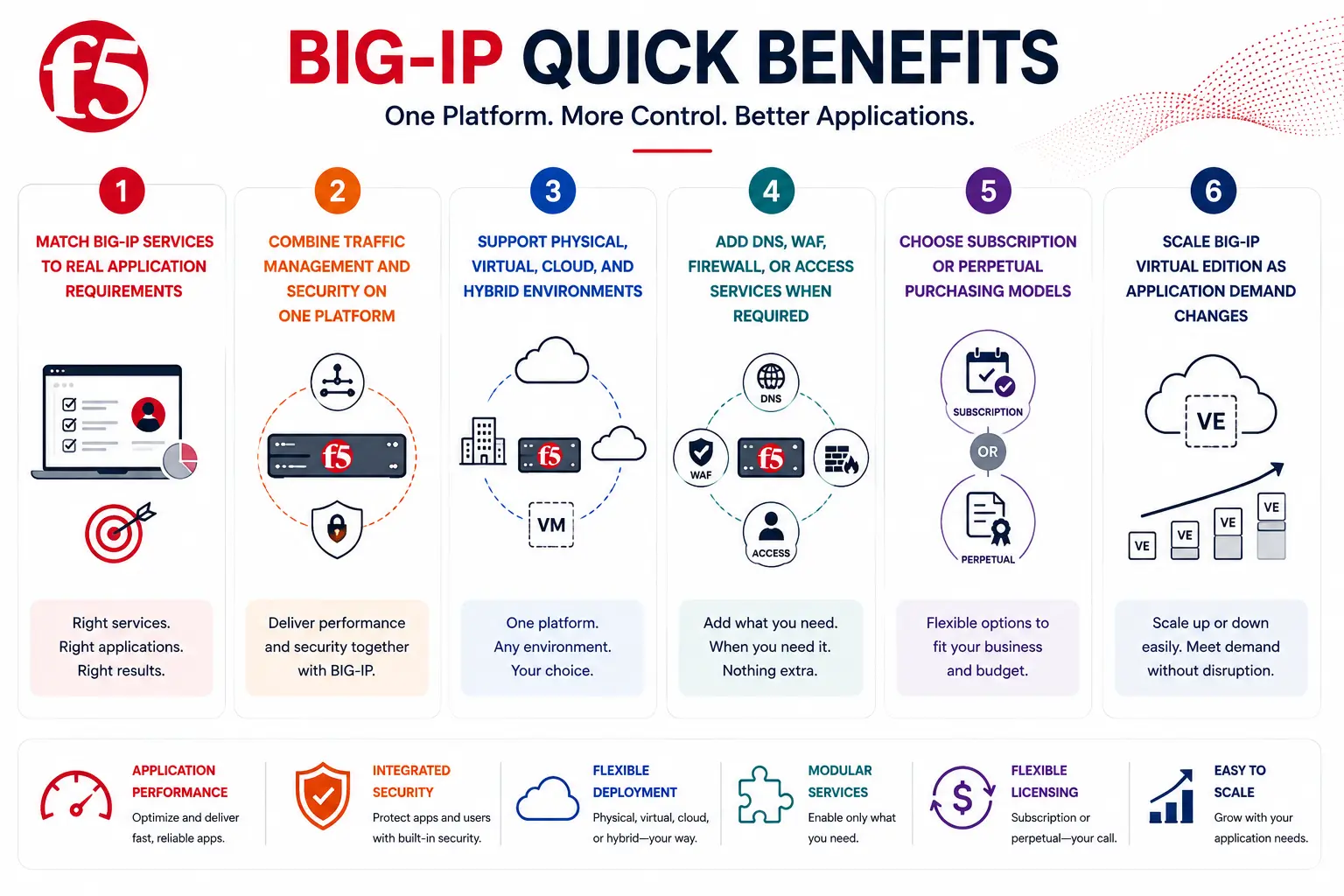
- Match BIG-IP services to real application requirements
- Combine traffic management and security on one platform
- Support physical, virtual, cloud, and hybrid environments
- Add DNS, WAF, firewall, or access services when required
- Choose subscription or perpetual purchasing models
- Scale BIG-IP Virtual Edition as application demand changes
BIG-IP License At a Glance
What it covers: F5 BIG-IP application delivery, traffic management, security, DNS, and access services
Product family: F5 License
Deployment: F5 hardware appliances, BIG-IP Virtual Edition, private cloud, public cloud, or hybrid
Licensing models: Subscription, perpetual, utility, and supported flexible consumption options
Activation: Base registration key with automatic or manual activation
Typical buyer: Organizations operating business-critical applications, ADC services, WAF, DNS, secure access, or hybrid application infrastructure

BIG-IP License Overview
BIG-IP licensing starts with the platform and the services enabled on it. BIG-IP Local Traffic Manager (LTM) provides local traffic management and load balancing. BIG-IP DNS extends application availability across locations, while Advanced WAF protects web applications and APIs. BIG-IP AFM focuses on network and DDoS protection, and BIG-IP APM provides identity-aware application and remote access.
For buyers searching for a BIGIP License, it is important to identify these services before requesting a part number. Buying a larger bundle is not automatically better. If the project only requires LTM, licensing security and access modules that will never be used adds unnecessary cost.
F5 offers BIG-IP through several commercial models. Perpetual licenses extend for the lifetime of the licensed product, while BIG-IP VE subscriptions are available in renewable one-, two-, and three-year terms. F5 also lists utility and Flex Consumption Program options for customers that need different procurement models.
BIG-IP Product Overview
BIG-IP sits in the application traffic path and makes decisions before traffic reaches the protected service. It can distribute requests across healthy servers, terminate and optimize SSL/TLS connections, apply application or network security policies, direct users to the appropriate data center, and control access according to identity or context.
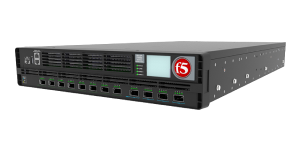
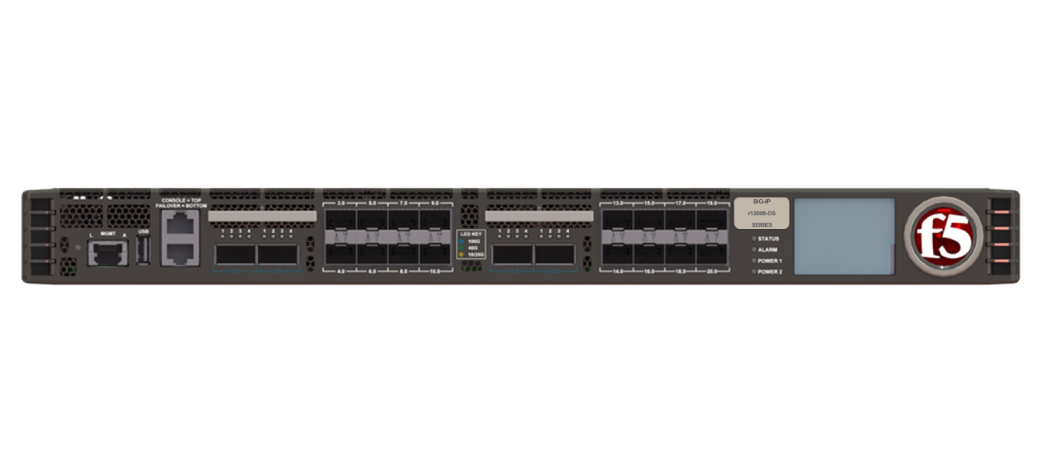
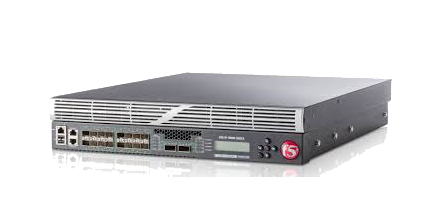
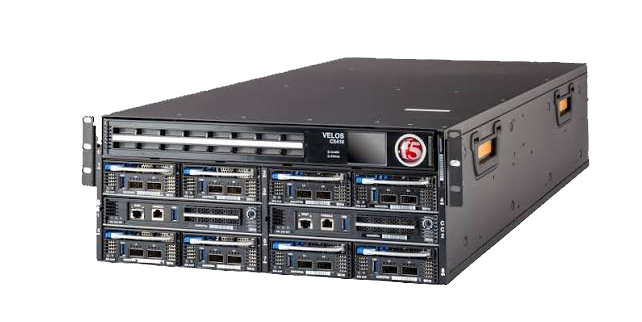
Physical deployments commonly use F5 rSeries or other supported BIG-IP hardware, while BIG-IP Virtual Edition brings the same core application services into virtualized and cloud environments. F5 states that BIG-IP VE supports leading hypervisors and public-cloud platforms and can reproduce application policies across hybrid and multicloud environments.
Core Technical Flow
Client Request → BIG-IP → Traffic / Security Policy → Application Pool → Response
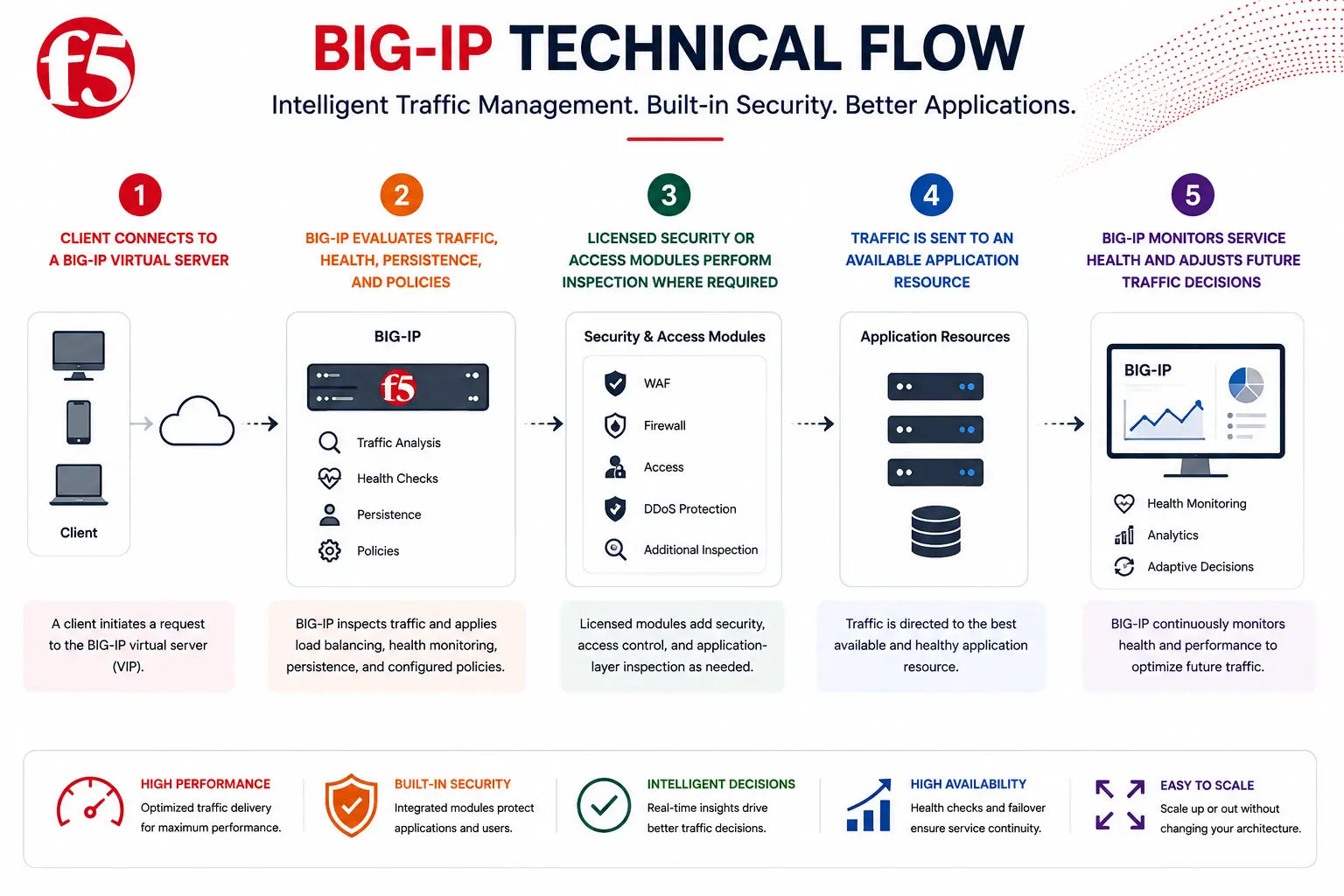
- A client connects to a BIG-IP virtual server.
- BIG-IP evaluates traffic, health, persistence, and configured policies.
- Licensed security or access modules perform additional inspection where required.
- Traffic is sent to an available application resource.
- BIG-IP monitors service health and adjusts future traffic decisions.
Options & Licensing Models
| Option | Typical use | Main consideration |
|---|---|---|
| BIG-IP LTM | Load balancing and application delivery | Traffic capacity and platform |
| BIG-IP DNS | Global application availability | DNS services and site architecture |
| Advanced WAF | Web and API protection | Protected applications and security scope |
| BIG-IP AFM | Network firewall and DDoS protection | Network/security capacity |
| BIG-IP APM | Application and remote access | Access requirements and user scale |
| BIG-IP VE | Virtual and cloud deployments | Instance count, capacity, and term |
| Perpetual | Long-term stable deployments | Platform, modules, and support |
| Subscription | Flexible virtual deployments | Term, instances, and service package |
BIG-IP VE subscription packaging can also use Good, Better, and Best bundles, while standalone modules are available where a customer needs a narrower service set.
Features & Benefits
The practical advantage of BIG-IP licensing is flexibility. An application team can start with traffic management and add security, DNS, or access capabilities as requirements become more complex. This is often cleaner than introducing a separate appliance for every application service.
It also supports mixed infrastructure. A company may run BIG-IP hardware in its primary data center and use BIG-IP VE for cloud or disaster-recovery applications while maintaining similar traffic and security policies. For buyers, that flexibility makes correct sizing important. The best BIGIP License is not necessarily the package with the most modules; it is the one that matches the workload, capacity, security requirement, and deployment lifecycle.
Compatibility & Requirements
Before ordering, confirm:
- Physical BIG-IP platform or Virtual Edition
- Required LTM, DNS, WAF, AFM, or APM services
- BIG-IP software version
- Expected application and SSL/TLS traffic
- HA or standalone architecture
- Number of virtual instances
- Existing registration and add-on keys
- Current support and upgrade requirements
How BIG-IP License Activation Works
A BIG-IP system requires a valid base registration key before licensed services can be used. Connected systems can activate directly against F5 licensing services. For restricted environments, BIG-IP also supports manual activation using a generated dossier and returned license information.
Where BIG-IQ is used for license management, administrators can also assign, revoke, and manage supported BIG-IP VE subscription licenses centrally.
BIG-IP License Pricing & Quote Process
BIG-IP pricing depends mainly on the deployment platform, required application services, capacity, license model, instance quantity, and support requirements.
For pricing, enter F5 as the brand and BIG-IP License as the product in the quote form. Existing license files, registration keys, appliance information, or technical requirements can also be attached. Details such as modules, bundle level, throughput, HA quantities, renewal, or migration can then be reviewed against the actual environment.
F5 pricing depends on your product edition, license type, deployment model, traffic needs, term, and support requirements.