

Trellix License provides access to an enterprise cybersecurity portfolio focused on endpoint protection, threat detection, network security, data protection, and security operations. With solutions such as Trellix Endpoint Security, XDR, NDR, IPS, and advanced threat intelligence services, Trellix helps organizations build layered protection against modern cyber threats.
Quick Benefits
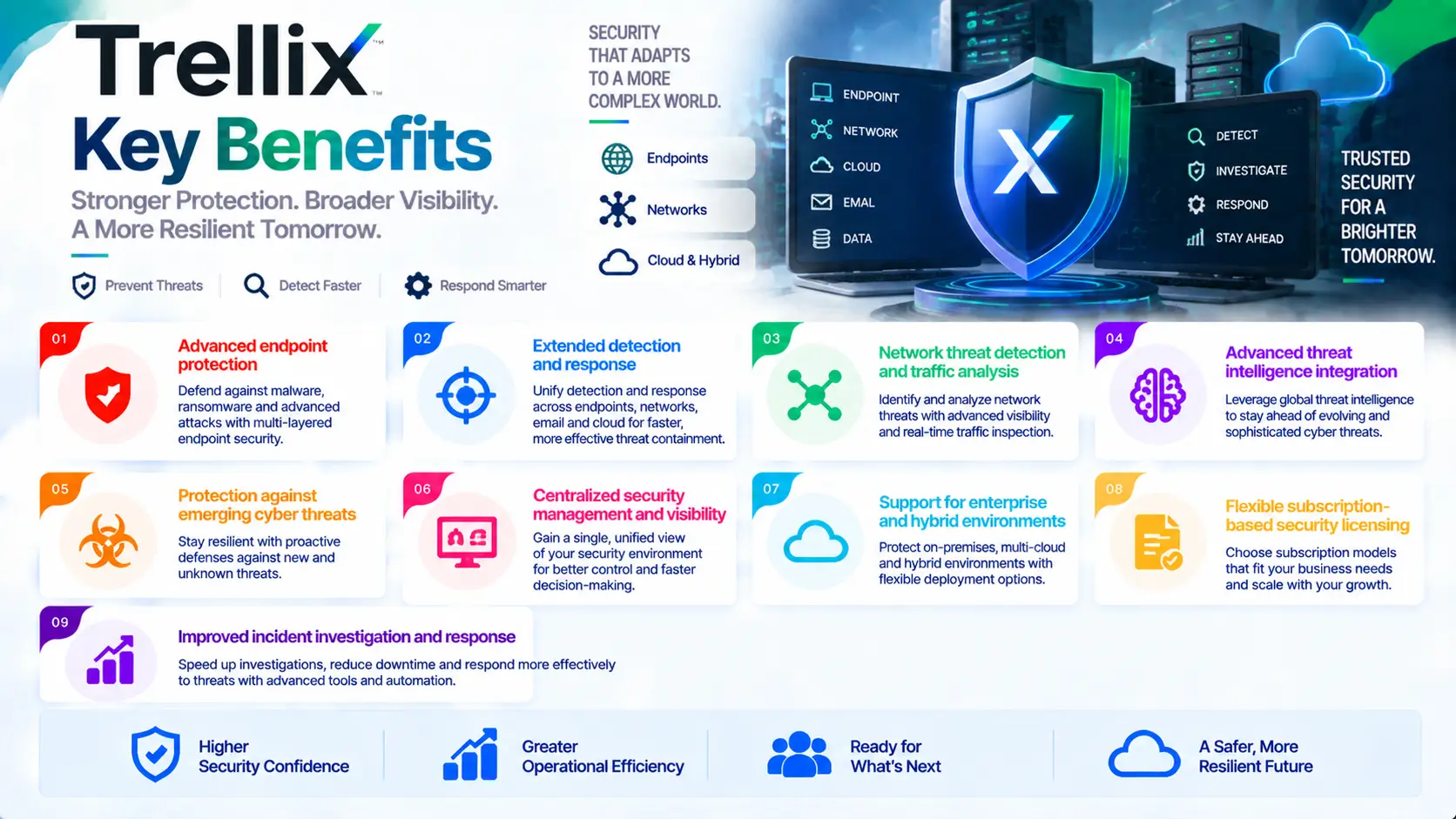
- Advanced endpoint protection against malware, ransomware, and advanced attacks
- Extended detection and response capabilities across security environments
- Network threat detection and traffic analysis
- Advanced threat intelligence integration
- Protection against emerging cyber threats
- Centralized security management and visibility
- Support for enterprise and hybrid environments
- Flexible subscription-based security licensing
- Improved incident investigation and response
Trellix License At a Glance
What it is: Enterprise cybersecurity licensing portfolio
Main security areas: Endpoint Security, XDR, Network Security, Threat Intelligence, and Security Operations
License type: Subscription-based and capability-based licensing
Primary licensing factors: Users, endpoints, devices, traffic volume, data sources, and selected security modules
Deployment models: On-Premises, Cloud, Hybrid, and Managed Security environments
Core platforms: Trellix Endpoint Security, Trellix XDR, Trellix Network Security, Trellix IPS, and related security solutions
Primary users: Enterprises, security operation teams, SOC analysts, network administrators, and IT security teams
Typical environments: Corporate networks, data centers, branch locations, cloud environments, and regulated industries
License Overview
A Trellix License provides organizations with access to security solutions that cover multiple layers of cybersecurity, from endpoint protection and network defense to advanced detection and response capabilities. Trellix licensing follows a flexible model where organizations select products and security capabilities based on their infrastructure, threat landscape, and operational requirements. Instead of using a single licensing structure for every solution, Trellix products are generally licensed according to factors such as protected endpoints, devices, users, traffic capacity, data sources, and subscription services.
For example, an organization deploying Trellix Endpoint Security may focus on the number of workstations and servers requiring protection, while a company implementing Trellix Network Security may need to evaluate network throughput, inspection requirements, and deployment architecture.
When selecting a Trellix License, businesses should first identify their security priorities. Organizations looking to improve endpoint resilience may require endpoint-focused solutions, while security operations teams may need broader visibility through XDR, threat intelligence, and incident response capabilities. Proper license planning helps organizations align cybersecurity investments with actual operational needs while avoiding unnecessary security modules or insufficient protection coverage.
How Trellix Licensing Works
Trellix licensing begins with identifying the security products and protection areas required by the organization. After selecting the appropriate solution, licensing is determined based on the scale of deployment, such as the number of endpoints, users, network devices, protected workloads, or required security data sources.
Most Trellix solutions operate through subscription-based models where organizations receive access to security features, updates, threat intelligence, and management capabilities during the selected subscription period. Additional modules can often be added as security requirements evolve.
For enterprise environments, licensing decisions usually involve evaluating current infrastructure, future growth, compliance requirements, and integration with existing security platforms. This approach allows organizations to build a security architecture that matches their operational environment rather than purchasing a fixed package with unnecessary capabilities.
Trellix Security Portfolio Overview
Trellix provides security solutions across different areas of enterprise cybersecurity, allowing organizations to address threats from endpoints, networks, and security operations environments.
| Solution Family | Purpose |
|---|---|
| Trellix Endpoint Security (ENS) | Endpoint protection, malware prevention, exploit protection, and device security |
| Trellix EDR | Endpoint detection, investigation, and response capabilities |
| Trellix XDR | Correlation of security events across endpoints, networks, email, cloud, and other sources |
| Trellix NDR | Network detection and response through traffic analysis and threat visibility |
| Trellix IPS | Network intrusion prevention and threat blocking |
| Trellix Threat Intelligence | Security intelligence and threat research capabilities |
| Trellix Network Security | Protection and monitoring for enterprise network environments |
| Trellix Security Operations Solutions | Support for investigation, analytics, and response workflows |
These solutions allow organizations to create security strategies based on their specific requirements, from endpoint protection to advanced SOC operations.
Features and Benefits
Trellix provides organizations with a broad cybersecurity ecosystem that addresses different stages of the threat lifecycle. Instead of focusing only on prevention, Trellix solutions combine protection, detection, investigation, and response capabilities.
One of the main advantages of the Trellix platform is its ability to protect multiple security layers. Endpoint solutions help secure user devices and servers, while network and XDR capabilities provide broader visibility into suspicious activity across the environment.
Trellix also focuses on improving security operations efficiency. By combining threat intelligence, analytics, and response capabilities, security teams can investigate incidents faster and make better-informed decisions.
For organizations managing complex infrastructures, Trellix provides flexible security options that can be adapted to different environments, including enterprise networks, cloud workloads, and hybrid architectures.
Compatibility and Requirements
Before selecting a Trellix License, organizations should evaluate their technical environment and security objectives.
Important considerations include:
- Number of endpoints and users
- Server and workstation operating systems
- Network architecture
- Security data sources
- Existing security solutions
- Cloud and hybrid environments
- Compliance requirements
- Required retention and reporting capabilities
Different Trellix products have different technical requirements, so organizations should evaluate compatibility before deployment. Proper assessment helps ensure that selected solutions integrate effectively with existing infrastructure and provide the expected level of protection.
Activation and Deployment
Activation begins after selecting the required Trellix products and completing the licensing process.
Typical deployment steps include:
- Activating the Trellix subscription
- Registering products and services
- Deploying required agents or appliances
- Connecting management platforms
- Configuring security policies
- Validating protection and monitoring capabilities
Organizations usually deploy security solutions in phases, starting with critical systems before expanding coverage across the environment. A structured deployment approach helps reduce operational disruption and ensures security policies are correctly configured.
Pricing and Quote Process
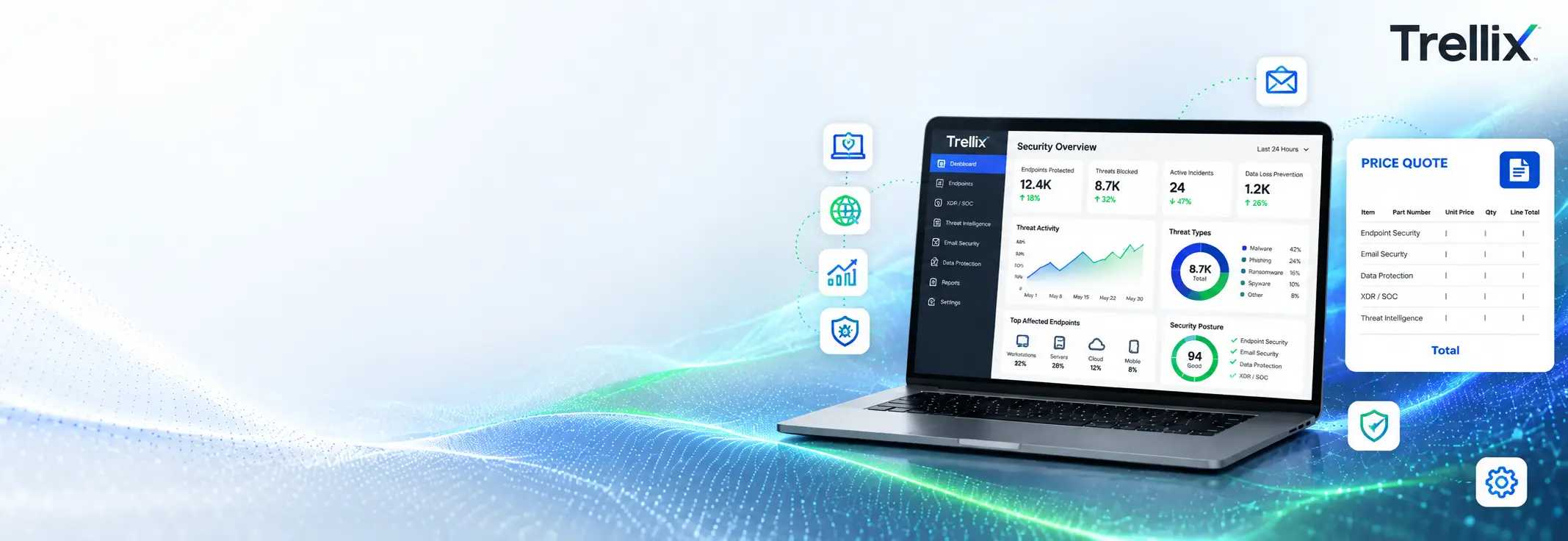
Pricing for a Trellix License depends on several factors, including the selected product, number of protected assets, deployment model, subscription duration, and required security capabilities.
Before requesting a quote, organizations should define:
- Required Trellix products
- Number of endpoints, users, or devices
- Network capacity requirements
- Required security modules
- Subscription period
- Support requirements
- Integration needs
Because Trellix provides solutions across multiple security domains, accurate sizing is important to select the correct licensing scope. Organizations should also consider future growth, additional workloads, and evolving security requirements when planning their investment.
Trellix pricing depends on your security solution, endpoint coverage, threat protection modules, deployment model, license term, and support requirements.