

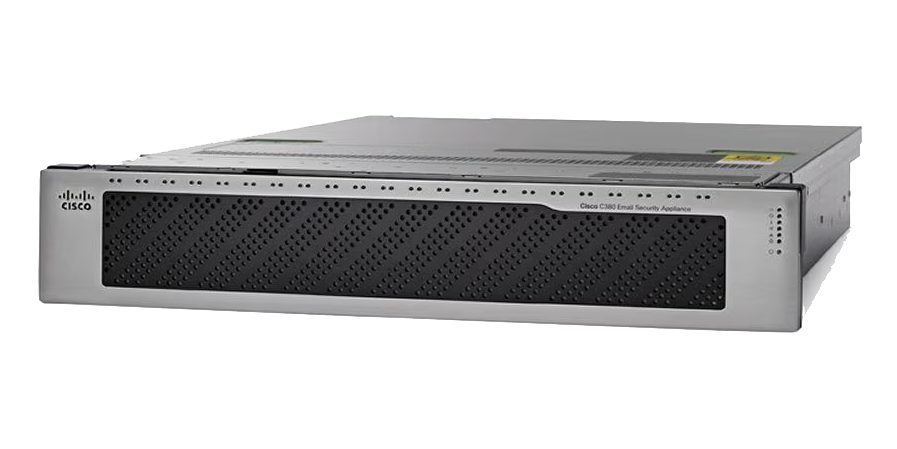
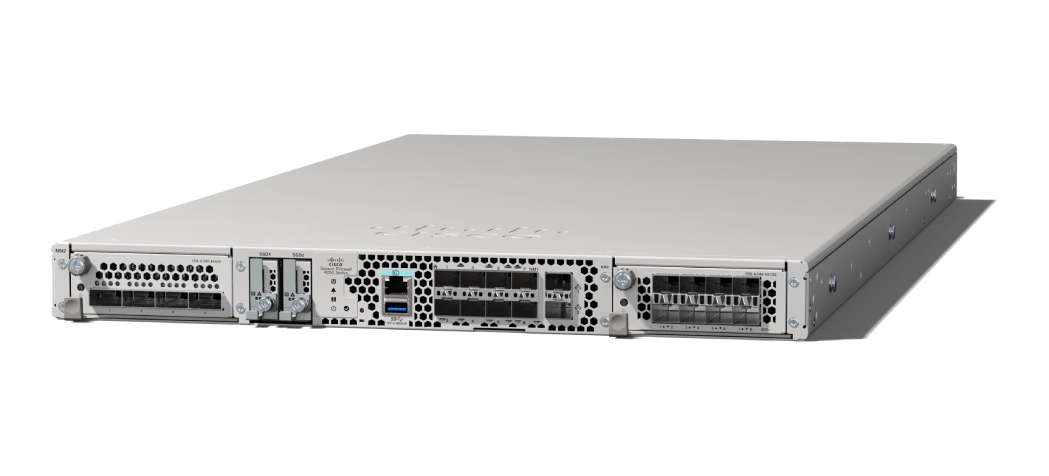

Cisco Security covers the firewall, identity, endpoint, cloud, email, DNS, VPN, threat intelligence, and extended detection technologies used to protect users, devices, applications, data, and network environments. The Cisco Security License is usually planned around the selected security product family, number of users or devices, enabled security services, deployment model, subscription tier, Smart Licensing workflow, support coverage, and whether the environment requires firewall protection, secure access, identity control, threat detection, endpoint protection, or cloud security.
Key Benefits
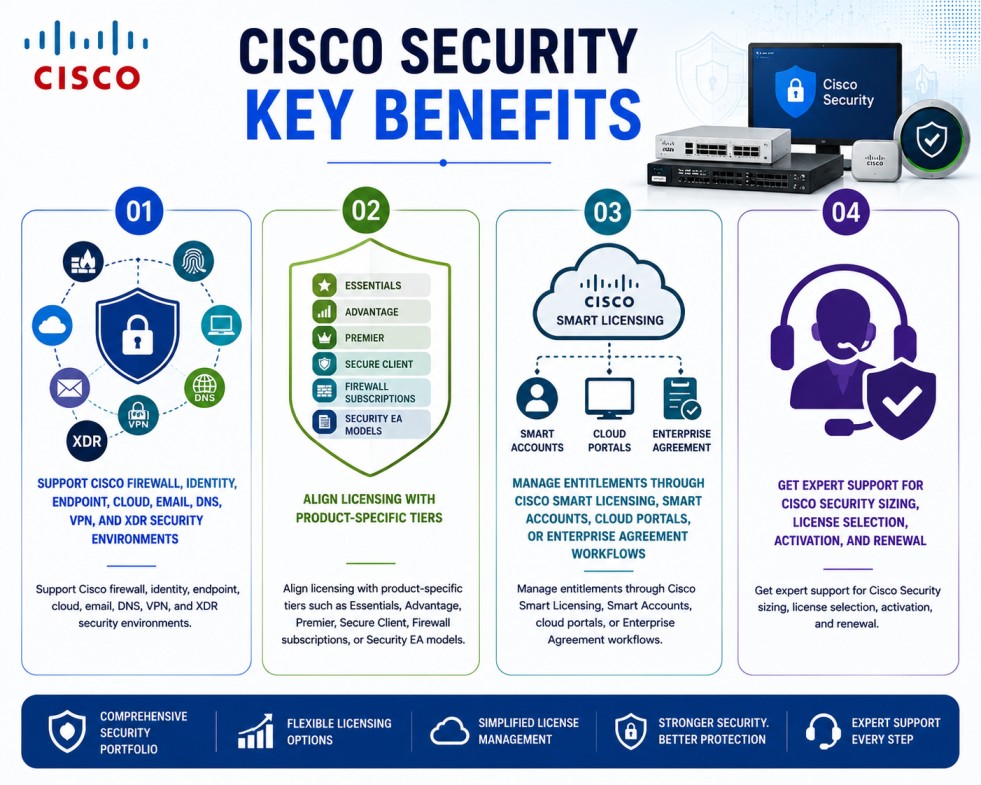
- Support Cisco firewall, identity, endpoint, cloud, email, DNS, VPN, and XDR security environments
- Align licensing with product-specific tiers such as Essentials, Advantage, Premier, Secure Client, Firewall subscriptions, or Security EA models
- Manage entitlements through Cisco Smart Licensing, Smart Accounts, cloud portals, or Enterprise Agreement workflows
- Get expert support for Cisco Security sizing, license selection, activation, and renewal
Cisco Security At a glance
What it does : Cisco Security provides a broad portfolio of security technologies for protecting enterprise networks, users, endpoints, applications, cloud access, email traffic, DNS activity, identity access, firewall environments, and security operations workflows.
License Category : Cisco License
License type : Product-dependent. Cisco Security licensing may include user-based subscriptions, device-based firewall subscriptions, endpoint licenses, cloud service subscriptions, Secure Client licensing, XDR tiers, Secure Access licensing, Talos-powered services, or Cisco Security Enterprise Agreement models.
Typical term : Usually subscription-based for modern Cisco security products, with term length depending on the selected solution, license tier, support level, and buying program.
Activation method : Cisco Smart Licensing, Cisco Smart Account, Virtual Account, Cisco Smart Software Manager, product cloud portals, Enterprise Agreement workspace, or product-specific activation workflows depending on the security solution.
Who needs it : Organizations that need firewall protection, zero trust access, identity security, endpoint protection, DNS-layer security, email security, VPN access, threat intelligence, network detection, incident response, or centralized security operations.
License Overview
Cisco Security licensing is not a single fixed model. It changes depending on whether the environment uses Cisco Secure Firewall, Cisco Firepower, Cisco ISE, Cisco Umbrella, Cisco Secure Endpoint, Cisco Secure Client, Cisco Secure Email, Cisco Secure Access, Cisco XDR, Cisco SNA, Cisco FMC, or Cisco Talos-related services.
The Cisco Security License should therefore be planned as a portfolio-level licensing framework rather than one universal license. Some security products are licensed by users, some by endpoints, some by protected devices, some by firewall model or subscription bundle, and some by service tier or Enterprise Agreement structure.
Because Cisco Security can include many protection layers, license planning should begin with the security use case. A firewall deployment does not have the same licensing requirement as an identity access project, an endpoint protection rollout, a DNS security service, or an XDR security operations platform.
Smart Licensing and cloud-based entitlement management are also important parts of Cisco Security operations. They help organizations manage license ownership, product access, usage visibility, subscription status, and renewal planning across different Cisco security technologies.
A properly aligned Cisco Security licensing model helps organizations avoid missing protection features, reduce renewal confusion, maintain entitlement compliance, and keep security coverage aligned with the actual risk profile of the environment.
How Cisco Security Works
Cisco Security works as a layered security ecosystem. Different products protect different parts of the environment, but they can also support each other through shared intelligence, telemetry, policy enforcement, and investigation workflows.
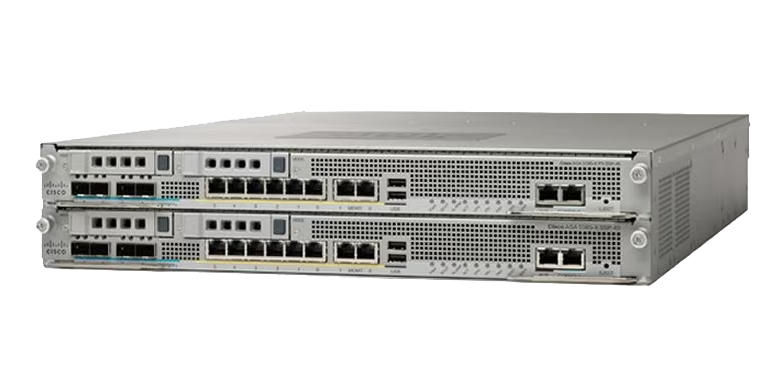
At the network layer, Cisco Secure Firewall, Cisco Firepower, FMC, and related firewall subscriptions help protect traffic, applications, VPN access, and perimeter or internal segments. At the identity layer, Cisco ISE and Duo help enforce access control, authentication, device trust, and zero trust policies. At the cloud and DNS layer, Cisco Umbrella and Secure Access help protect users and applications from risky destinations and insecure access paths.
At the endpoint and operations layer, Cisco Secure Endpoint, Cisco Secure Client, Cisco XDR, Cisco SNA, and Cisco Talos-related intelligence help security teams detect, investigate, and respond to threats across endpoint, network, firewall, email, identity, and DNS telemetry.
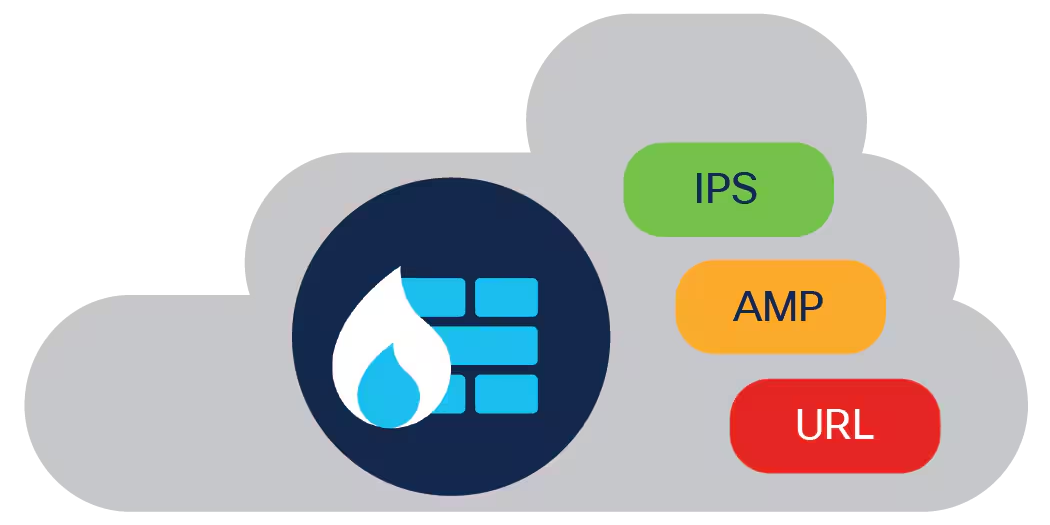
Licensing connects these layers to the security capabilities the organization actually needs. For example, a firewall may need IPS, Malware Defense, URL Filtering, or Secure Client entitlements. An identity deployment may need Cisco ISE tiers. An endpoint deployment may need endpoint protection or EDR capabilities. A SOC deployment may need Cisco XDR tiers and integrations.
The goal is not just to activate a product. The goal is to match the licensed Cisco Security capability with the organization’s risk, architecture, users, devices, and security operations model.
Core technical flow
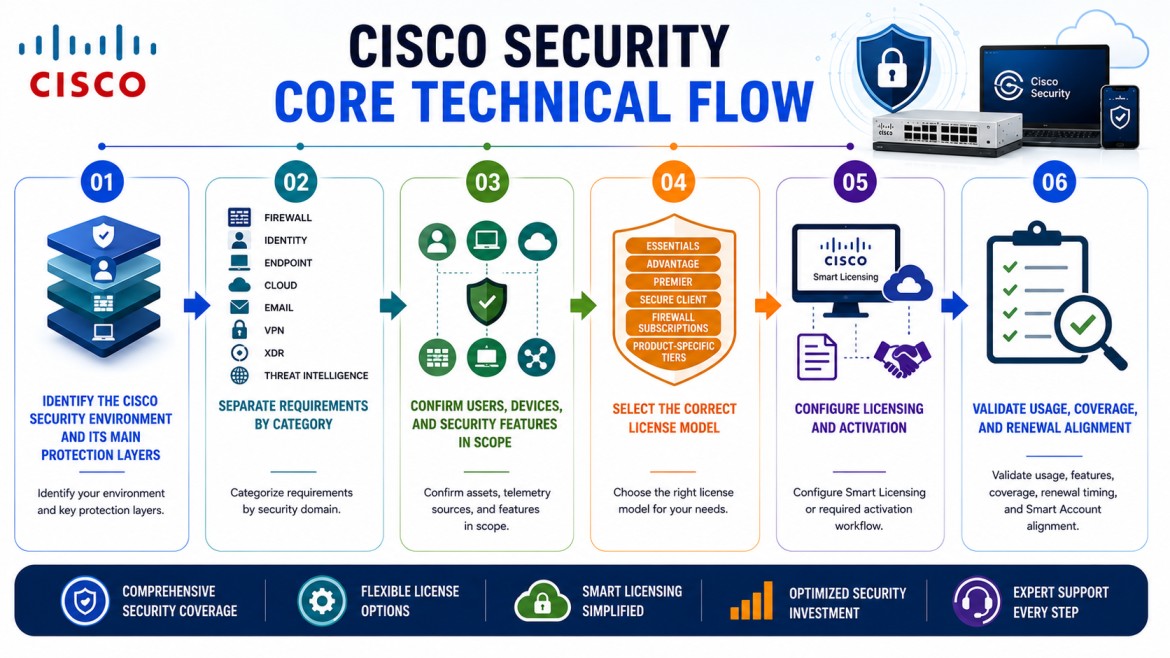
- Identify the Cisco Security environment and its main protection layers
- Separate requirements by category: firewall, identity, endpoint, cloud, email, VPN, XDR, or threat intelligence
- Confirm users, devices, firewalls, endpoints, cloud services, telemetry sources, and security features in scope
- Select the correct license model, such as Essentials, Advantage, Premier, Secure Client, Firewall subscriptions, or product-specific tiers
- Configure Smart Licensing, cloud portal activation, Enterprise Agreement provisioning, or product-specific activation workflow
- Validate license usage, feature availability, security coverage, renewal timing, and Smart Account alignment
Main Cisco Security License Categories
| Category | Typical Products | Licensing Focus |
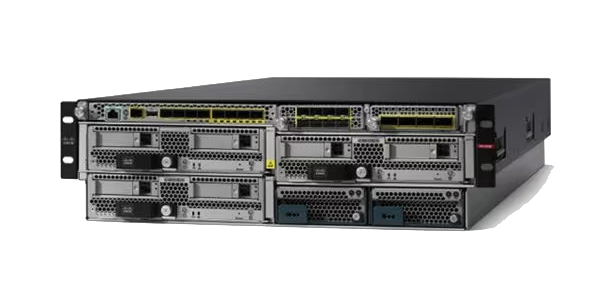
| Cisco Firewall License | Secure Firewall, Firepower, ASA, FTD | Firewall subscriptions, IPS, Malware Defense, URL Filtering, VPN, management |
| Cisco FMC License | Firewall Management Center | Centralized firewall management, FTD licensing, Smart Licensing, policy control |
| Cisco ISE License | Identity Services Engine | Endpoint count, Essentials, Advantage, Premier, Device Administration |
| Cisco Secure Client License | AnyConnect / Secure Client | VPN access, endpoint posture, client-based secure connectivity |
| Cisco Umbrella License | Umbrella DNS and cloud security | DNS security, secure internet gateway, user protection, cloud-delivered security |
| Cisco Secure Endpoint License | Secure Endpoint / EDR | Endpoint protection, EDR, threat hunting, malware defense |
| Cisco Secure Email License | Secure Email Gateway / Cloud Mailbox | Email protection, phishing defense, malware protection, message security |
| Cisco Secure Access License | Security Service Edge / zero trust access | User access, private application access, internet security, SSE capabilities |
| Cisco XDR License | Extended Detection and Response | Essentials, Advantage, Premier, telemetry correlation, incident response workflows |
| Cisco SNA License | Secure Network Analytics / StealthWatch | Flow telemetry, behavioral analytics, network detection, FPS sizing |
| Cisco Talos License | Talos-powered services and intelligence | Threat intelligence, incident response, intelligence integrations, security research |
Options & Licensing Models
| Licensing Model | Best for | Typical Scope | What affects pricing |
| Security Enterprise Agreement | Larger Cisco security estates | Multiple Cisco security products under a simplified agreement | Suite scope, users, products, and term |
| Essentials / Advantage / Premier tiers | Tiered security products | ISE, XDR, Secure Endpoint, or other tiered security solutions | Feature depth and user/device scope |
| Firewall subscriptions | Secure Firewall and Firepower deployments | IPS, Malware Defense, URL Filtering, Secure Client, and related services | Firewall model, term, and security bundle |
| User-based subscriptions | Identity, cloud, access, and endpoint services | Users, endpoints, or protected identities | User count and service package |
| Device or telemetry-based licensing | Firewall, SNA, and network security | Firewalls, flow sources, managed devices, telemetry rate | Device model, FPS, or deployment scale |
| Smart Licensing / cloud activation | Modern Cisco security products | Entitlement ownership, usage reporting, and service activation | Product family and activation method |
Features & Benefits
As security environments grow across users, branches, cloud applications, remote access, endpoints, email, DNS, and hybrid infrastructure, Cisco Security licensing becomes important for keeping protection capabilities aligned with real threats. A well-planned licensing approach helps organizations enable the right security features for each layer. Firewalls can be licensed for threat prevention and URL control, identity platforms can be licensed for access policy and segmentation, endpoint tools can be licensed for EDR, and XDR platforms can be licensed for cross-domain detection and response.
One major benefit is layered protection. Cisco Security products can protect different attack surfaces while still supporting shared intelligence, policy control, and investigation workflows. Another benefit is stronger operational visibility. Cisco Smart Licensing, cloud portals, and Enterprise Agreement workflows help administrators review entitlement status, active subscriptions, usage, and renewal timing across the security portfolio. Over time, this helps organizations reduce licensing gaps, improve security coverage, simplify renewals, and maintain better control over Cisco security infrastructure.
System Requirements
Common environments
- Enterprise firewall and network security environments
- Identity access and zero trust architectures
- Endpoint protection and EDR deployments
- DNS, cloud, and secure internet access environments
- Email security and anti-phishing workflows
- SOC, XDR, threat intelligence, and incident response programs
Technical requirements
- Supported Cisco security product and deployment model
- Cisco Smart Account and Virtual Account access where applicable
- Correct license tier, subscription, or product entitlement
- Cloud portal, Smart Licensing, EA workspace, or product-specific activation access
- User, endpoint, firewall, telemetry, and feature inventory for sizing
How activation works
Activating Cisco Security licenses usually starts with identifying the product family, selected subscription tier, Cisco Smart Account, and entitlement location.
For Smart Licensing-based products, administrators use Cisco Smart Software Manager, Smart Accounts, and Virtual Accounts to manage entitlement ownership and product usage. For cloud-delivered products, activation may also involve product portals, tenant provisioning, subscription assignment, or user onboarding. For Enterprise Agreement customers, license access may be provisioned through the EA workspace and related Cisco account workflows.
The activation process is not identical for every Cisco Security product. Cisco Secure Firewall, Cisco ISE, Cisco Umbrella, Cisco Secure Endpoint, Cisco XDR, Cisco Secure Client, Cisco SNA, and Cisco Secure Email each have their own activation or onboarding steps. However, the general workflow is similar: confirm entitlement, assign the subscription, activate or register the product, enable the required features, and validate usage.
After activation, administrators should review license status, user or device assignment, security feature availability, product health, subscription usage, renewal timing, and Smart Account alignment. This is especially important for Cisco Security environments with multiple products because a missing entitlement can affect a specific protection layer, such as firewall inspection, endpoint response, DNS security, VPN access, or XDR correlation.
Pricing factors + quote process
Pricing for Cisco Security usually depends on product family, number of users or devices, license tier, security features, deployment model, support level, and subscription term.
A firewall licensing request may be priced around firewall model, security subscriptions, and term. An ISE deployment may be sized around active endpoints and required tiers. An endpoint or cloud security project may depend on user or device count. A Cisco XDR deployment may depend on selected tier, integrations, telemetry requirements, and SOC workflow needs.
Additional considerations such as Cisco Security Enterprise Agreement eligibility, Secure Client requirements, Talos services, incident response needs, Smart Licensing method, cloud tenant provisioning, support coverage, and renewal timing can also influence the final quote.
During the quote process, the Cisco Security environment is reviewed by product family first. Then users, devices, features, deployment architecture, activation method, and support term are mapped into the correct licensing approach.
After you request a quote
- We review your Cisco Security environment and product scope
- Identify the right license family, tier, and activation model
- Validate users, devices, features, support, and renewal requirements
- Provide official pricing, delivery details, and activation guidance