

Imagicle Advanced Queueing is a call queue management solution designed to help organizations handle high volumes of incoming calls through intelligent routing, waiting management, and operator workflows. An Imagicle Advanced Queueing License enables businesses to improve customer communication, reduce missed calls, and optimize call distribution across teams.
Quick Benefits
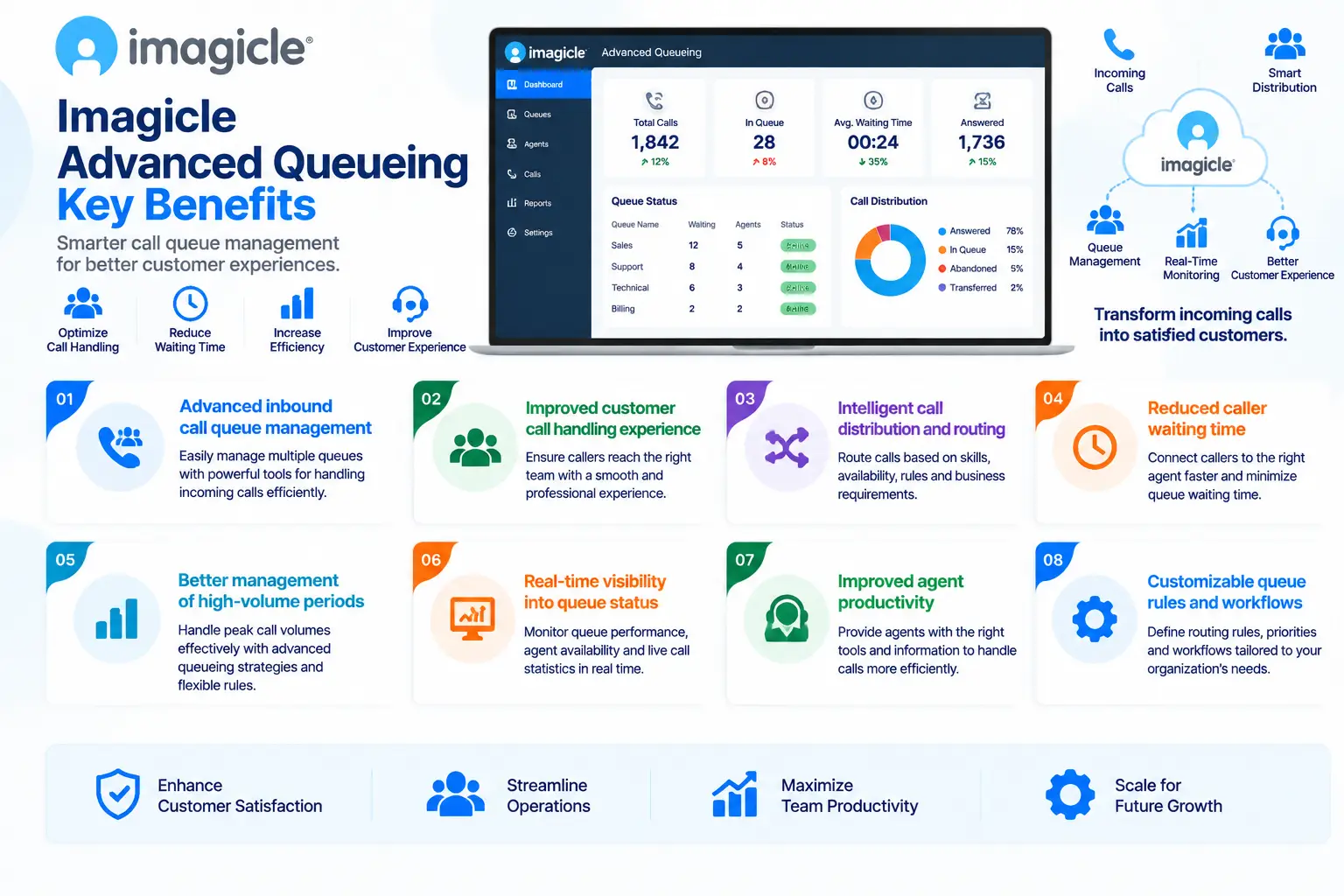
- Advanced inbound call queue management
- Improved customer call handling experience
- Intelligent call distribution and routing
- Reduced caller waiting time
- Better management of high-volume communication periods
- Real-time visibility into queue status
- Improved agent productivity
- Customizable queue rules and workflows
Imagicle Advanced Queueing At a Glance
What it is: Advanced call queue management application
Parent category: Imagicle License
Primary role: Manage incoming calls through structured queues and routing workflows
Main users: Customer service teams, help desks, reception departments, support centers, and communication administrators
Core capabilities: Call queues, routing rules, waiting management, queue visibility, and agent workflows
Integration platforms: Cisco Unified Communications Manager, Cisco Webex, and supported collaboration environments
Deployment: Cloud, hybrid, and on-premises models depending on environment

License Overview
An Imagicle Advanced Queueing License is generally determined by the scale of the call-handling environment, including the number of agents, queues, extensions, and communication workflows that need to be managed. Unlike basic call routing features available in many telephony platforms, advanced queue management focuses on improving how organizations handle customer interactions at scale. Licensing requirements depend on factors such as the number of users participating in queues, the number of departments requiring dedicated workflows, and the level of reporting or management capabilities needed.
Organizations should evaluate their call volumes, peak communication periods, service departments, and existing collaboration environment before selecting the appropriate license capacity. A small support team may require a limited queue configuration, while larger enterprises may need multiple queues, agent groups, and advanced routing capabilities. The selected Imagicle Advanced Queueing License should also consider future growth, especially when organizations expect additional departments, increased customer interaction, or expanded service operations.
Product Overview
Intelligent Call Queue Management
When organizations receive large numbers of incoming calls, handling every request immediately is not always possible. Without a structured queue system, callers may experience long waiting times, unanswered calls, or inconsistent service. Imagicle Advanced Queueing provides a dedicated solution for organizing incoming calls and distributing them efficiently among available agents. By managing calls through predefined queues, organizations can ensure that customer requests reach the appropriate team while maintaining better control over communication flows.
Advanced Call Distribution
Different departments often require different routing strategies. A sales team may prioritize new inquiries, while a support department may need balanced distribution among available agents. Imagicle Advanced Queueing allows organizations to create structured routing workflows based on business requirements. Calls can be distributed according to configured rules, helping improve response efficiency and ensuring that workloads are shared more effectively among team members.
Waiting Experience and Caller Management
The experience a caller receives while waiting can directly affect customer satisfaction. Advanced queue capabilities allow organizations to manage waiting periods more professionally by providing controlled queue behavior and communication options. Instead of leaving callers without information, businesses can create predictable waiting experiences that reduce frustration and improve service perception.
Core Technical Flow
Incoming Customer Call
→ Enterprise Telephony Platform (Cisco CUCM / Webex Environment)
→ Imagicle Advanced Queueing Engine
→ Queue Rules and Routing Policies
→ Available Agent / Department
→ Call Completion and Reporting
The solution manages incoming calls according to configured queue logic, availability rules, and business communication requirements.
Options and Licensing Models
| Licensing Factor | Description | Suitable For |
|---|---|---|
| Agents / Users | Number of employees handling queued calls | Customer service and support teams |
| Queues | Number of departments or services requiring separate call flows | Organizations with multiple communication groups |
| Extensions | Voice users connected to queue workflows | Enterprise telephony environments |
| Advanced Features | Additional routing, reporting, and management capabilities | Organizations requiring detailed control |
| Integration Requirements | Existing UC platform and telephony configuration | Cisco and enterprise communication environments |
| Support and Subscription | Updates, maintenance, and technical assistance | Long-term production deployments |
The correct licensing model depends on the number of agents, communication teams, queue complexity, and required customer service capabilities.
Features and Benefits
Imagicle Advanced Queueing helps organizations create more structured and reliable customer communication processes. Instead of allowing incoming calls to be handled through basic routing methods, businesses can create organized workflows that distribute calls according to team availability and service requirements.
One of the main benefits is improving customer experience. Reduced waiting times, better routing decisions, and increased visibility into queue activity help organizations provide more consistent service. The solution also improves operational efficiency for support teams. Supervisors can better understand workload distribution and identify periods where additional resources may be required. For organizations with customer-facing departments, advanced queue management provides a more professional communication experience while extending the capabilities of existing unified communications platforms.
Compatibility and Requirements
Before deploying Imagicle Advanced Queueing, organizations should evaluate their existing communication architecture and service requirements.
Important considerations include:
- Current telephony platform
- Number of agents and departments
- Expected call volume
- Required queue structures
- Existing extensions and users
- Reporting requirements
- Integration requirements
Imagicle Advanced Queueing is commonly deployed alongside Cisco Unified Communications Manager and Cisco Webex environments. Organizations should verify compatibility with their current communication infrastructure before implementation. A proper assessment helps ensure that queue workflows match actual business processes.
Activation and Deployment
Imagicle Advanced Queueing deployment begins with activating the purchased license and preparing the communication environment.
Typical deployment steps include:
- License registration and activation
- Connecting the application with the UC platform
- Creating queues and agent groups
- Configuring routing rules
- Testing call flows and user access
Organizations usually begin with priority departments before expanding queue management across additional teams.
Pricing and Quote Process
Pricing for an Imagicle Advanced Queueing License depends mainly on the number of agents, queues, extensions, required features, and deployment environment.
Before requesting a quote, organizations should define:
- Number of agents
- Number of required queues
- Call volume expectations
- Existing communication platform
- Required reporting capabilities
- Subscription and support requirements
Accurate planning ensures that the selected license matches operational requirements without unnecessary capacity. Organizations should also consider future growth because expanding customer service teams, additional departments, or increased call volumes may affect licensing needs.
Imagicle pricing depends on your selected applications, licensing model, deployment environment, subscription term, and support needs.