

Tenable One License provides a unified exposure management platform for organizations that need broader visibility across vulnerabilities, attack surfaces, cloud environments, applications, identities, and other sources of cyber risk.
Tenable One brings multiple exposure-management capabilities into a common platform, allowing security teams to identify assets, evaluate exposure, prioritize risk, and coordinate remediation across different areas of the enterprise. Current Tenable One licensing is available through Tenable One Foundation and Tenable One Advanced, with additional components available according to organizational requirements.
Quick benefits
- Unified exposure management across enterprise environments
- Broader visibility into cyber exposure and attack surface
- Vulnerability and exposure assessment
- Cloud and web application visibility
- Identity exposure analysis
- Risk prioritization across security data
- Centralized exposure management workflows
- Support for hybrid and distributed environments
- Integration of multiple Tenable capabilities
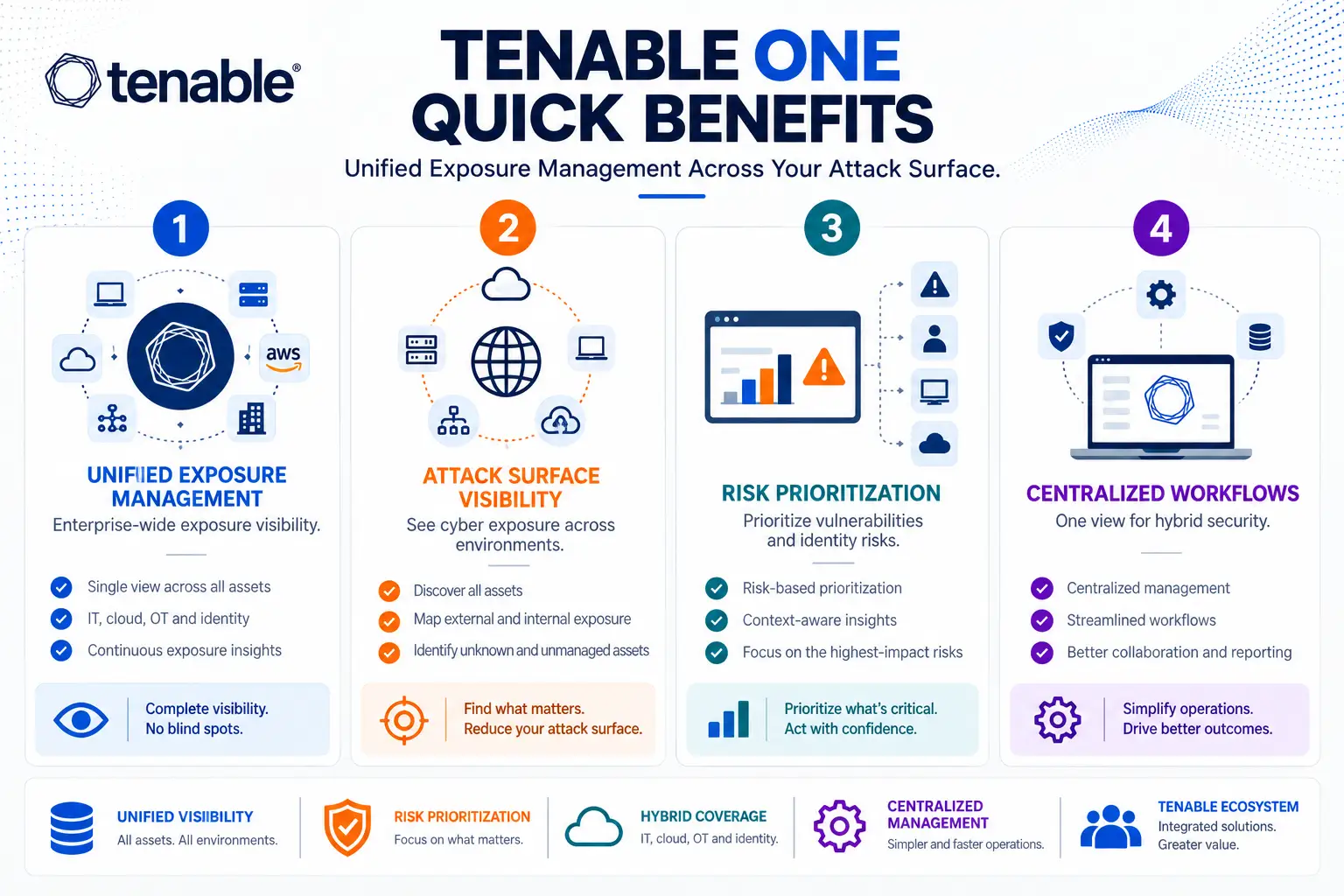
Tenable One At a glance
What it does: Tenable One provides unified visibility and exposure management across vulnerabilities, attack surfaces, cloud, applications, and identities.
Parent Category: Tenable License
License type: Subscription-based, asset-based
Current editions: Tenable One Foundation and Tenable One Advanced
Minimum purchase: Foundation from 100 assets · Advanced from 300 assets
Typical deployment: Cloud and hybrid enterprise environments
Who needs it: Organizations requiring centralized exposure visibility across multiple security domains
Primary licensing factor: Number and type of managed assets
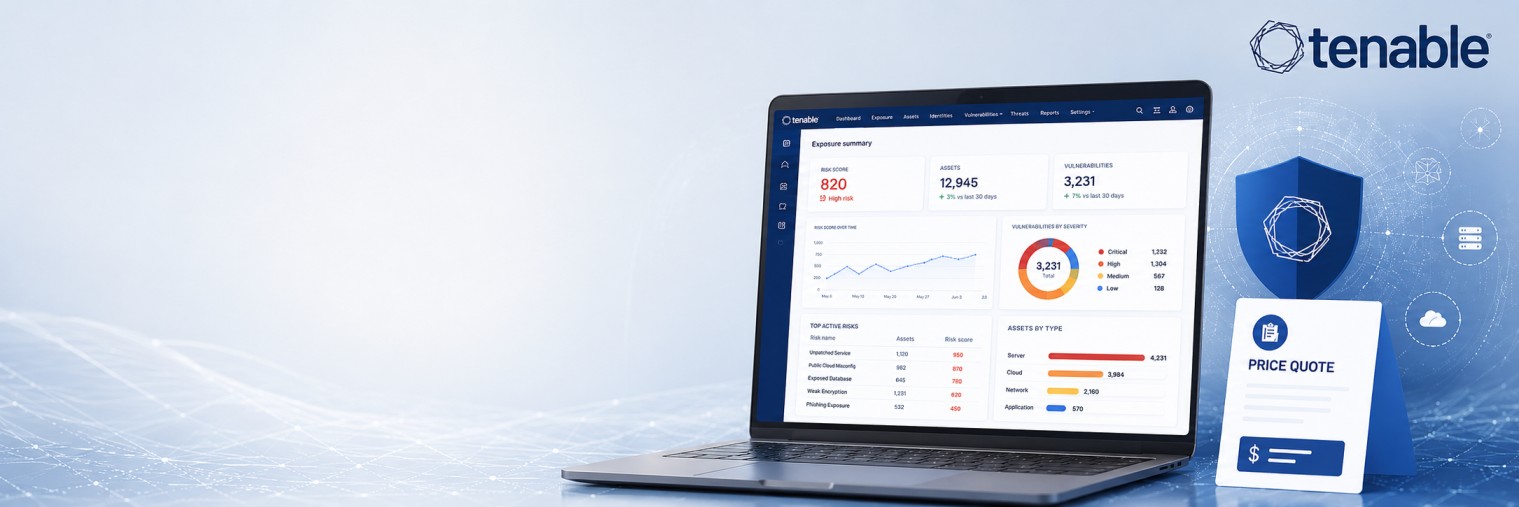
License Overview
Organizations managing modern infrastructures often need to evaluate more than traditional vulnerability counts. Cloud resources, web applications, identities, external assets, and infrastructure can all contribute to the organization’s overall exposure.
Tenable One provides a broader licensing framework that allows different Tenable capabilities to operate within a common exposure-management environment. Current Tenable One licensing is structured around Foundation and Advanced editions, with different applications and capabilities included in each edition.
Licensing is generally based on assets, although the exact asset definition can differ between Tenable One applications. For example, infrastructure assets, web applications, and identity assets may be counted differently when calculating the required license capacity.
Product Overview
Modern organizations commonly operate across data centers, cloud platforms, remote environments, applications, and identity systems. Managing these areas separately can make it difficult to understand how individual vulnerabilities contribute to overall exposure.
Tenable One is designed to provide a more centralized view of these security conditions.
The platform can bring together capabilities related to vulnerability management, attack surface management, cloud exposure, web application security, and identity exposure. This allows security teams to examine exposure from multiple perspectives instead of treating every security domain as an isolated system.
For organizations with hybrid infrastructure, this broader visibility can help security teams identify relationships between assets, vulnerabilities, identities, and externally exposed resources.
Core technical flow
- Discover and identify assets across connected environments
- Collect vulnerability, exposure, identity, cloud, and application data
- Correlate security information across the Tenable platform
- Analyze exposure and risk across the environment
- Prioritize the most significant security issues
- Provide visibility and remediation information for security teams
Options & Tiers
| Plan / Model | Best for | Key inclusions | What affects price |
|---|---|---|---|
| Tenable One Foundation | Organizations beginning unified exposure management | Core exposure-management capabilities | Asset count, term |
| Tenable One Advanced | Larger and more complex environments | Broader Tenable One capabilities and applications | Asset count, selected components |
| Vulnerability Management | Infrastructure-focused security teams | Vulnerability assessment and exposure visibility | Managed assets |
| Web App Scanning | Organizations protecting web applications | Web application assessment | FQDNs or applicable assets |
| Identity Exposure | Organizations monitoring identity risks | Identity exposure assessment | Identity assets |
| Cloud Exposure | Cloud-focused environments | Cloud resource and workload exposure visibility | Cloud resources and selected edition |
| Additional Components | Organizations extending platform coverage | Additional Tenable One applications and capabilities | Component and asset requirements |
Features & Benefits
Tenable One helps organizations move from isolated vulnerability findings toward broader exposure management.
One of its main advantages is the ability to combine security information from different parts of the enterprise. Vulnerabilities can be evaluated alongside asset context, cloud resources, applications, external exposure, and identity-related risks.
This broader context can help security teams understand which issues require attention first and where exposure may extend across multiple security domains.
The platform also provides a scalable approach to exposure management. As the number of assets grows, organizations can expand their licensed capacity according to their environment and applicable Tenable One licensing model.
Compatibility & Requirements
Common environments
- Enterprise infrastructure environments
- Hybrid and multi-cloud deployments
- Internet-facing applications
- Distributed data centers
- Identity and directory environments
- Large vulnerability-management programs
Technical requirements
- Defined asset inventory
- Access to required Tenable applications
- Appropriate cloud or identity integrations where required
- Connectivity for supported assessment components
- Tenable One subscription capacity matching the environment
How activation works
Activating Tenable One starts with selecting the appropriate Foundation or Advanced edition and determining the number of assets that need to be covered.
After licensing is provisioned, administrators configure the required Tenable applications and integrations. Depending on the selected components, this can include vulnerability management, web application assessment, cloud exposure, identity exposure, or other supported capabilities.
The organization then begins collecting security data across its selected environments. Asset coverage and license consumption should be reviewed regularly because changes in infrastructure can increase the number of assets requiring management.
Pricing factors + quote process
Tenable One pricing depends primarily on the selected edition, asset quantity, required components, deployment requirements, and subscription term.
Organizations should prepare:
- Total infrastructure assets
- Cloud resources
- Web applications and FQDNs
- Identity population
- Required Tenable One edition
- Additional components
- Existing Tenable products
- Deployment architecture
- Subscription duration
The asset calculation is particularly important because different Tenable One applications can use different asset definitions. Accurate sizing should therefore be performed according to the actual applications being licensed rather than simply counting employees or devices.
After you request a quote
- We review your exposure-management requirements
- Determine the appropriate Tenable One edition
- Review asset quantities and required components
- Provide official pricing and delivery details
- Share activation and deployment guidance
Tenable One pricing depends on the selected edition, asset quantity, components, term, and deployment requirements.
Tenable One Pricing depends on your license edition, quantity, term, and deployment needs.