

Imagicle Budget Control is a telecom cost management solution designed to help organizations control communication expenses by defining spending limits, monitoring usage, and managing telephone costs. An Imagicle Budget Control License enables businesses to establish call budgets, prevent unexpected charges, and improve visibility into communication spending across users and departments.
Quick Benefits
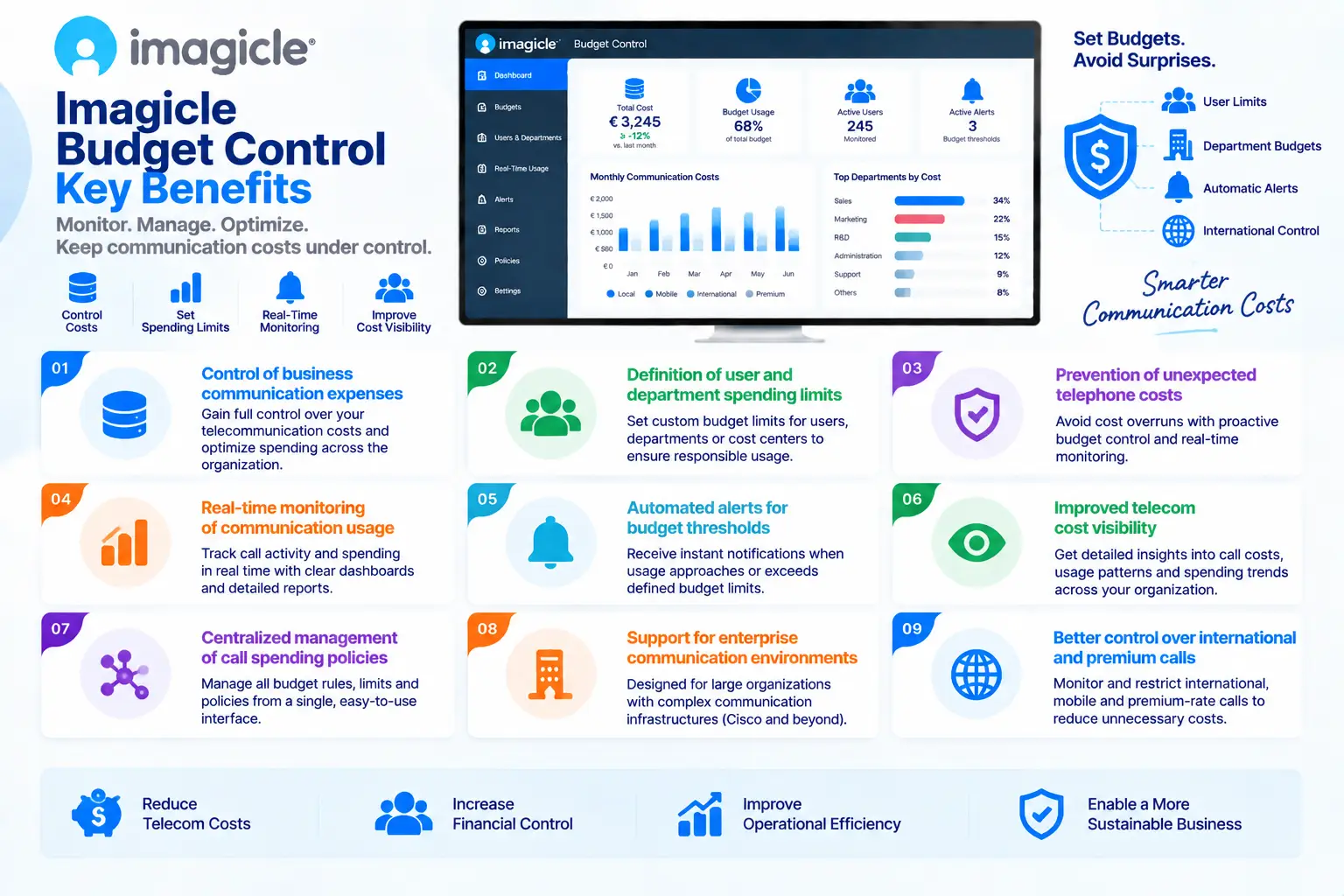
- Control of business communication expenses
- Definition of user and department spending limits
- Prevention of unexpected telephone costs
- Real-time monitoring of communication usage
- Automated alerts for budget thresholds
- Improved telecom cost visibility
- Centralized management of call spending policies
- Support for enterprise communication environments
- Better control over international and premium calls
Imagicle Budget Control At a Glance
What it is: Telecom budget management and call cost control solution
Vendor: Imagicle
Parent category: Imagicle License
Primary role: Monitor and control telephone spending through configurable budgets and policies
Main users: Enterprises, IT administrators, telecom managers, finance teams, and organizations managing voice expenses
Core capabilities: Budget allocation, spending limits, usage monitoring, alerts, and call cost management
Integration platforms: Cisco Unified Communications Manager, Cisco Webex, and supported collaboration environments

License Overview
An Imagicle Budget Control License is generally determined by the number of users, extensions, or communication resources that require spending control and monitoring capabilities. Unlike solutions focused on communication features such as recording or routing, Budget Control is designed around financial management of voice services. Licensing considerations are therefore connected to the number of monitored users, the complexity of budget policies, and the level of control required across the organization.
Organizations should evaluate which users or departments require spending restrictions, whether different budget levels are needed, and which types of calls should be monitored or restricted. For example, a company may apply stricter limits to temporary employees while allowing broader communication budgets for management teams.
The required licensing model may also depend on integration with existing telephony environments, reporting requirements, and the number of departments requiring separate cost policies. When selecting an Imagicle Budget Control License, organizations should focus on their communication cost management objectives and define clear usage policies before deployment.
Product Overview
Telecom Expense Management
Communication expenses can become difficult to manage as organizations grow and employees use voice services across multiple departments, locations, and business functions.
Imagicle Budget Control provides organizations with a structured way to monitor and manage telephone spending.
Instead of reviewing unexpected charges after they occur, businesses can define spending rules in advance and maintain better control over communication costs.
Budget Policies and Spending Limits
Different users and departments often have different communication requirements.
A sales department may need international calling capabilities, while other teams may only require domestic communication services.
Imagicle Budget Control allows organizations to create different spending policies according to business needs.
By assigning appropriate limits, companies can balance operational flexibility with financial control.
Real-Time Cost Monitoring
Visibility is essential for effective telecom cost management.
Imagicle Budget Control helps organizations monitor communication usage and identify when users or departments approach predefined spending limits.
This allows administrators to take action before costs exceed expected levels.
For organizations managing large voice environments, continuous monitoring provides better control over communication expenses.
Core Technical Flow
User Telephone Activity
→ Cisco Communication Platform
→ Call Cost Data Collection
→ Imagicle Budget Control Analysis
→ Budget Rules and Spending Policies
→ Alerts / Restrictions / Reporting
→ Communication Cost Optimization
Options and Licensing Models
| Licensing Factor | Description | Suitable For |
|---|---|---|
| Users / Extensions | Number of users requiring budget monitoring | Organizations with different user populations |
| Departments | Number of business groups requiring separate policies | Enterprises with distributed teams |
| Budget Policies | Number and complexity of spending rules | Organizations with different communication requirements |
| Call Monitoring Scope | Types of calls and usage patterns analyzed | Businesses requiring detailed cost control |
| Integration Requirements | Connection with existing telephony platforms | Cisco and enterprise communication environments |
| Support and Subscription | Updates, maintenance, and assistance options | Long-term production deployments |
The correct licensing approach depends on the number of monitored users, cost control objectives, and complexity of communication policies.
Features and Benefits
Imagicle Budget Control helps organizations move from reactive telecom cost management toward proactive spending governance. Instead of discovering excessive communication expenses after billing cycles, businesses can define policies and monitor usage continuously.
A major benefit is improved financial visibility. IT and finance teams can understand how communication resources are being used and identify areas where spending adjustments may be required.
The solution also supports better operational control by allowing organizations to create different rules for different users and departments. This prevents unnecessary restrictions while maintaining protection against uncontrolled expenses.
For enterprises with large communication environments, Budget Control provides a practical way to align telephone usage with business policies and financial expectations.
Compatibility and Requirements
Before deploying Imagicle Budget Control, organizations should evaluate their communication infrastructure and cost management requirements.
Important considerations include:
- Existing telephony platform
- Number of users and extensions
- Current communication cost structure
- Required budget policies
- Reporting requirements
- Department-level control needs
- Integration requirements
Imagicle Budget Control is commonly deployed alongside Cisco Unified Communications Manager and supported collaboration environments. Organizations should define their spending policies and communication rules before implementation to ensure the solution aligns with business requirements.
Activation and Deployment
Imagicle Budget Control deployment begins with activating the purchased license and preparing the communication environment.
Typical deployment steps include:
- License registration and activation
- Connecting communication data sources
- Defining budget policies
- Configuring alerts and restrictions
- Testing cost monitoring workflows
Organizations usually begin with high-cost departments or specific user groups before expanding budget management across the entire organization.
Pricing and Quote Process
Pricing for an Imagicle Budget Control License depends mainly on the number of monitored users, required policies, integration environment, and selected management capabilities.
Before requesting a quote, organizations should define:
- Number of users requiring monitoring
- Departments requiring separate budgets
- Required spending policies
- Existing communication platform
- Alert and reporting requirements
- Support and subscription needs
Accurate planning helps organizations select appropriate cost control capabilities without unnecessary licensing expenses. Organizations should also consider future growth because additional users, departments, and communication services may increase budget management requirements.
Imagicle pricing depends on your selected applications, licensing model, deployment environment, subscription term, and support needs.