

GFI Exinda is a network performance management solution designed to help organizations monitor application traffic, optimize bandwidth usage, and improve user experience across complex network environments. A GFI Exinda License enables IT teams to gain visibility into network behavior, prioritize critical applications, and manage performance issues proactively.
Quick Benefits
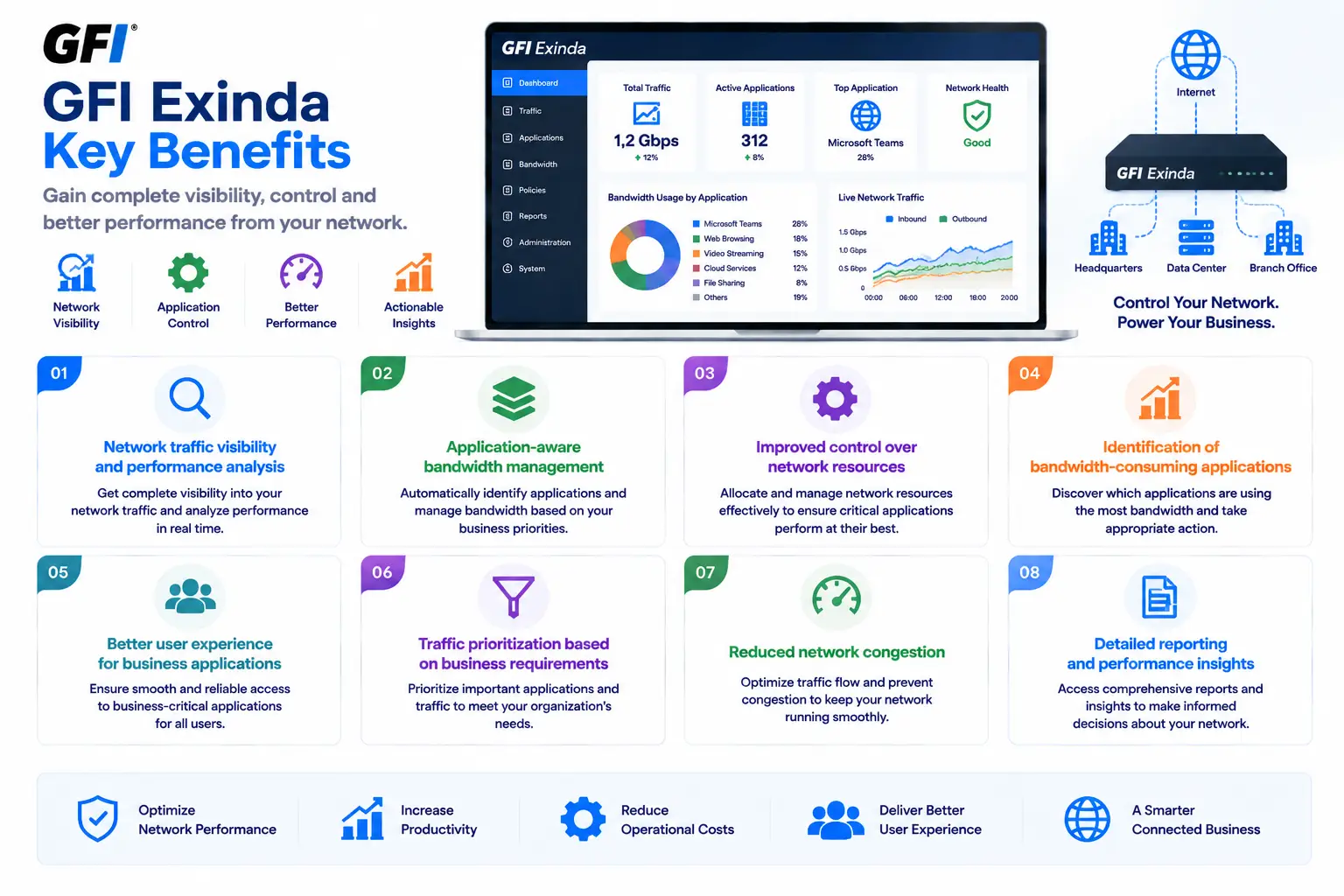
- Network traffic visibility and performance analysis
- Application-aware bandwidth management
- Improved control over network resources
- Identification of bandwidth-consuming applications
- Better user experience for business applications
- Traffic prioritization based on business requirements
- Reduced network congestion
- Detailed reporting and performance insights
GFI Exinda At a Glance
What it is: Network performance management and application visibility platform
Vendor: GFI Software
Parent category: GFI License
Primary role: Monitor, analyze, and optimize network application performance
Main users: Network administrators, IT operations teams, infrastructure engineers, and service providers
Core capabilities: Traffic analysis, application monitoring, bandwidth optimization, reporting, and performance management
Supported environments: Enterprise networks, branch offices, distributed infrastructures, and hybrid environments

License Overview
A GFI Exinda License is generally determined by the size and complexity of the network environment being monitored and optimized. Unlike solutions licensed by users or mailboxes, network performance management platforms typically consider factors such as bandwidth capacity, monitored locations, deployed appliances, and required visibility levels.
Organizations should evaluate their current network architecture, number of sites, internet connections, critical applications, and performance requirements before selecting the appropriate license model. A smaller organization with a single location may require limited monitoring capabilities, while larger enterprises with multiple branches and high application traffic may need broader visibility and optimization features.
The licensing requirement can also depend on deployment type. Organizations using physical appliances, virtual deployments, or distributed monitoring architectures may have different sizing considerations. When selecting a GFI Exinda License, businesses should focus on the actual network performance challenges they want to solve, including congestion, application delays, bandwidth utilization, and user experience issues.
Product Overview
Network Visibility and Application Monitoring
Modern business networks support a wide range of applications, including cloud services, collaboration platforms, voice communication, business systems, and internal applications. Without detailed visibility, identifying the cause of poor performance can be difficult.
GFI Exinda helps organizations understand how network resources are being used by analyzing traffic patterns and application behavior.
Instead of only showing bandwidth consumption, the platform provides insight into which applications, users, and services are affecting network performance.
This visibility allows IT teams to make informed decisions about optimization and resource allocation.
Application Performance Optimization
Network problems are not always caused by insufficient bandwidth. Poor application performance can result from inefficient traffic distribution, unmanaged applications, or lack of prioritization.
GFI Exinda enables organizations to classify applications and apply performance policies based on business importance.
For example, critical business applications, voice services, and collaboration tools can receive priority over non-essential traffic.
This approach helps organizations maintain better performance for important services without necessarily increasing network capacity.
Core Technical Flow
Network Traffic Sources
→ GFI Exinda Traffic Analysis Engine
→ Application Identification and Performance Monitoring
→ Bandwidth Policies and Optimization Rules
→ Performance Improvement and Reporting
Options and Licensing Models
| Licensing Factor | Description | Suitable For |
|---|---|---|
| Bandwidth Capacity | Network throughput or traffic volume managed by the solution | Organizations with different connectivity sizes |
| Sites / Locations | Number of monitored branches or network environments | Distributed organizations |
| Appliance Deployment | Physical or virtual monitoring deployment requirements | Different infrastructure architectures |
| Application Visibility | Level of traffic analysis and application monitoring required | Businesses needing detailed performance insights |
| Optimization Features | Additional controls for traffic management and prioritization | Environments with performance challenges |
| Support and Maintenance | Updates, technical support, and assistance | Long-term production deployments |
Features and Benefits
GFI Exinda helps organizations move from reactive network troubleshooting toward proactive performance management. By providing visibility into applications, users, and traffic behavior, IT teams can understand how network resources are being consumed and identify the real causes of performance issues.
One of the key benefits is improved application experience. Instead of simply increasing bandwidth whenever users report slow performance, organizations can analyze traffic patterns and optimize the way existing resources are used. The solution also supports better operational decisions through reporting and historical analysis. Network teams can identify trends, evaluate capacity requirements, and plan infrastructure improvements based on actual usage data. For organizations with distributed offices or business-critical applications, GFI Exinda provides greater control over network performance and helps maintain reliable service delivery.
Compatibility and Requirements
Before deploying GFI Exinda, organizations should evaluate their network architecture and performance requirements.
Important considerations include:
- Current bandwidth capacity
- Number of network locations
- Critical applications requiring optimization
- Existing network infrastructure
- Traffic monitoring requirements
- Reporting needs
- Deployment preferences
Organizations should determine where visibility is required and whether the solution will monitor headquarters, branch offices, data centers, or cloud-connected environments. A proper assessment ensures that monitoring coverage matches actual business requirements.
Activation and Deployment
GFI Exinda deployment begins with activating the purchased license and preparing the network monitoring environment.
Typical deployment steps include:
- License registration and activation
- Deploying the appliance or virtual instance
- Connecting network traffic sources
- Configuring monitoring policies
- Creating optimization rules
Organizations typically begin by observing network behavior before applying optimization policies. This allows administrators to understand traffic patterns and create appropriate performance rules.
Pricing and Quote Process
Pricing for a GFI Exinda License depends mainly on network size, bandwidth capacity, deployment architecture, and required optimization capabilities.
Before requesting a quote, organizations should define:
- Number of monitored locations
- Available bandwidth capacity
- Critical applications requiring visibility
- Deployment model
- Required reporting capabilities
- Support requirements
Accurate planning helps organizations select the appropriate license capacity without unnecessary costs. Organizations should also consider future network growth because additional branches, cloud applications, and increased traffic volume can affect performance management requirements.
GFI pricing depends on your product edition, security solution, license term, deployment model, user requirements, and support needs.