

GFI SD-WAN is a software-defined networking solution designed to improve branch connectivity, optimize network traffic, and provide centralized control over distributed business networks. A GFI SD-WAN License helps organizations manage WAN performance, improve application availability, and simplify connectivity between offices and cloud services.
Quick Benefits
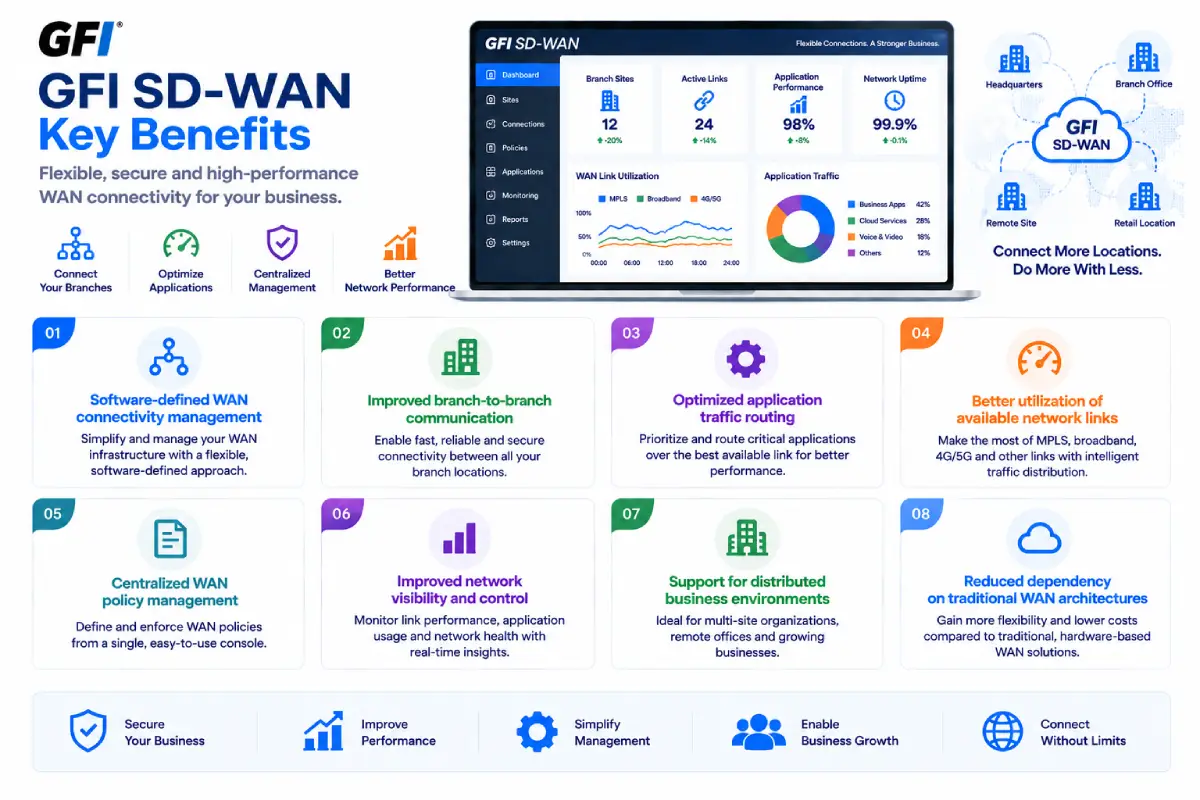
- Software-defined WAN connectivity management
- Improved branch-to-branch communication
- Optimized application traffic routing
- Better utilization of available network links
- Centralized WAN policy management
- Improved network visibility and control
- Support for distributed business environments
- Reduced dependency on traditional WAN architectures
GFI SD-WAN At a Glance
What it is: Software-defined wide area networking solution
Vendor: GFI Software
Parent category: GFI License
Primary role: Optimize and manage WAN connectivity across distributed environments
Main users: Network administrators, IT teams, infrastructure engineers, and service providers
Core capabilities: Traffic optimization, centralized management, WAN policy control, and connectivity improvement
Supported environments: Branch offices, enterprise networks, hybrid environments, and multi-site organizations
Deployment: Software-based network deployment
License Overview
A GFI SD-WAN License is generally determined by the scale of the WAN environment being managed, including the number of locations, connected devices, network links, and required networking capabilities. Unlike traditional software licensing models based only on users, SD-WAN licensing is closely related to the network architecture itself. Organizations should evaluate the number of branch offices, WAN connections, internet links, bandwidth requirements, application priorities, and security requirements before selecting the appropriate license capacity.
A small organization with a few branch locations may require a simpler SD-WAN deployment, while larger enterprises with distributed offices, cloud workloads, and multiple connectivity providers may require broader management capabilities. The required licensing model can also depend on additional functionality such as centralized orchestration, traffic optimization, analytics, security integration, and advanced routing capabilities. When selecting a GFI SD-WAN License, organizations should consider both current connectivity requirements and future expansion because adding new branches, users, or cloud services can increase WAN management needs.
Product Overview
Software-Defined WAN Connectivity
Traditional WAN architectures often rely on dedicated connections that can be expensive and difficult to scale. As organizations adopt cloud applications, remote work, and distributed operations, they require more flexible methods for connecting locations. GFI SD-WAN helps organizations create more adaptable WAN environments by using software-based management and intelligent traffic control. Instead of treating every network connection the same way, SD-WAN allows organizations to define policies that determine how applications and traffic should use available network resources.
Intelligent Traffic Management
One of the key advantages of SD-WAN technology is the ability to optimize network traffic based on business requirements. Different applications have different priorities. Voice communication, video conferencing, cloud applications, and business-critical systems may require better performance than less important traffic.
GFI SD-WAN enables organizations to manage traffic flows and apply policies that improve application performance. This helps businesses make better use of available connections while maintaining a more predictable user experience.
Cloud and Hybrid Network Support
Modern businesses increasingly depend on cloud-based applications and services. Traditional WAN designs may not provide the flexibility required for cloud-first environments because traffic often needs to travel through centralized locations before reaching cloud platforms. SD-WAN architecture allows organizations to optimize connectivity paths and improve access to cloud applications. This makes it valuable for businesses using SaaS platforms, remote collaboration tools, and distributed cloud services.
Centralized Network Management
Managing multiple network locations manually can increase operational complexity. GFI SD-WAN provides centralized control over WAN policies, connectivity settings, and performance visibility. This allows network teams to manage distributed environments more efficiently and respond faster to connectivity issues.
Core Technical Flow
Branch Offices / Data Centers / Cloud Services
→ SD-WAN Edge Devices
→ Centralized Management and Policy Engine
→ Traffic Analysis and Path Selection
→ Optimized WAN Connectivity
→ Performance Monitoring and Reporting
Options and Licensing Models
| Licensing Factor | Description | Suitable For |
|---|---|---|
| Sites / Locations | Number of branches or network locations connected through SD-WAN | Organizations with distributed offices |
| WAN Devices | Number of SD-WAN edge devices managed | Networks with different deployment sizes |
| Bandwidth Requirements | Network capacity and traffic levels supported | Organizations with high data usage |
| Advanced Features | Additional routing, analytics, and optimization capabilities | Enterprises requiring advanced control |
| Cloud Connectivity | Integration with cloud platforms and services | Cloud-focused organizations |
| Support and Maintenance | Updates and technical assistance | Long-term production environments |
Features and Benefits
GFI SD-WAN helps organizations modernize their network connectivity by providing greater flexibility and control over WAN operations. Instead of depending entirely on traditional network connections, businesses can use software-based policies to improve how traffic moves between locations and services.
A major benefit is improved operational efficiency. Network teams can manage multiple locations through centralized controls rather than manually configuring every branch environment separately. The solution also helps organizations optimize existing connectivity investments. By intelligently managing traffic across available links, businesses can improve application performance while reducing the pressure on individual network connections. For organizations adopting cloud services and remote work models, SD-WAN provides a more flexible approach to maintaining reliable connectivity between users, applications, and business locations.
Compatibility and Requirements
Before deploying GFI SD-WAN, organizations should evaluate their current WAN architecture and connectivity requirements.
Important considerations include:
- Number of branch locations
- Existing WAN connections
- Internet and bandwidth availability
- Cloud application usage
- Security requirements
- Network topology
- Existing routing infrastructure
Organizations should also review whether their current network devices and connectivity providers support the planned SD-WAN architecture. A proper assessment helps ensure that the deployment improves connectivity without creating unnecessary complexity.
Activation and Deployment
GFI SD-WAN deployment begins with activating the purchased license and preparing the required network environment.
Typical deployment steps include:
- License registration and activation
- Deploying SD-WAN components
- Connecting network locations
- Defining traffic policies
- Monitoring WAN performance
Organizations usually begin with a limited number of locations before expanding SD-WAN policies across the complete network.
Pricing and Quote Process
Pricing for a GFI SD-WAN License depends mainly on the size of the WAN environment, number of locations, managed devices, bandwidth requirements, and selected capabilities.
Before requesting a quote, organizations should define:
- Number of branch offices
- WAN connection types
- Number of managed devices
- Required traffic optimization features
- Cloud connectivity requirements
- Support and maintenance needs
Accurate planning helps organizations select a license model that matches their network architecture without unnecessary costs. Organizations should also consider future expansion because adding branches, applications, and additional connectivity requirements can affect SD-WAN capacity over time.
GFI pricing depends on your product edition, security solution, license term, deployment model, user requirements, and support needs.